
The Problem With Fruit Tree Netting
Australia needs to adopt more wildlife friendly fruit tree protection methods. Bad netting is deadly to our wildlife.
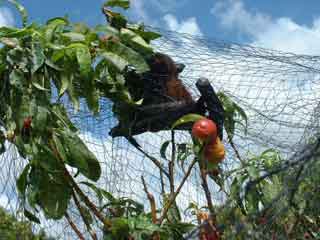
A poor Flying-fox caught in fruit netting
It causes injury and death to many animals, not just bats. Every year thousands of flying-foxes, possums, snakes and birds become entangled in loose netting erected over backyard and orchard fruit trees.
Unfortunately our ever-expanding population growth has resulted in the removal of the natural habitat of our Australian Flying-foxes. And thus their food sources are diminishing.
Add to this severe drought and bush fires, bats are now moving closer to suburban and semi-rural homes. This means our backyard fruit trees and orchards are becoming an attractive alternative source of food.
Bad Fruit Tree Nets
Most people want to protect their backyard fruit trees from un-invited guests. To many this means some form of netting. Whilst a reasonable idea in itself, the type of net and how it is applied is very important.
The most popular is thin nylon monofilament netting. It is freely available and sold by most hardware stores. But this is the deadliest form of netting that could possibly be used.
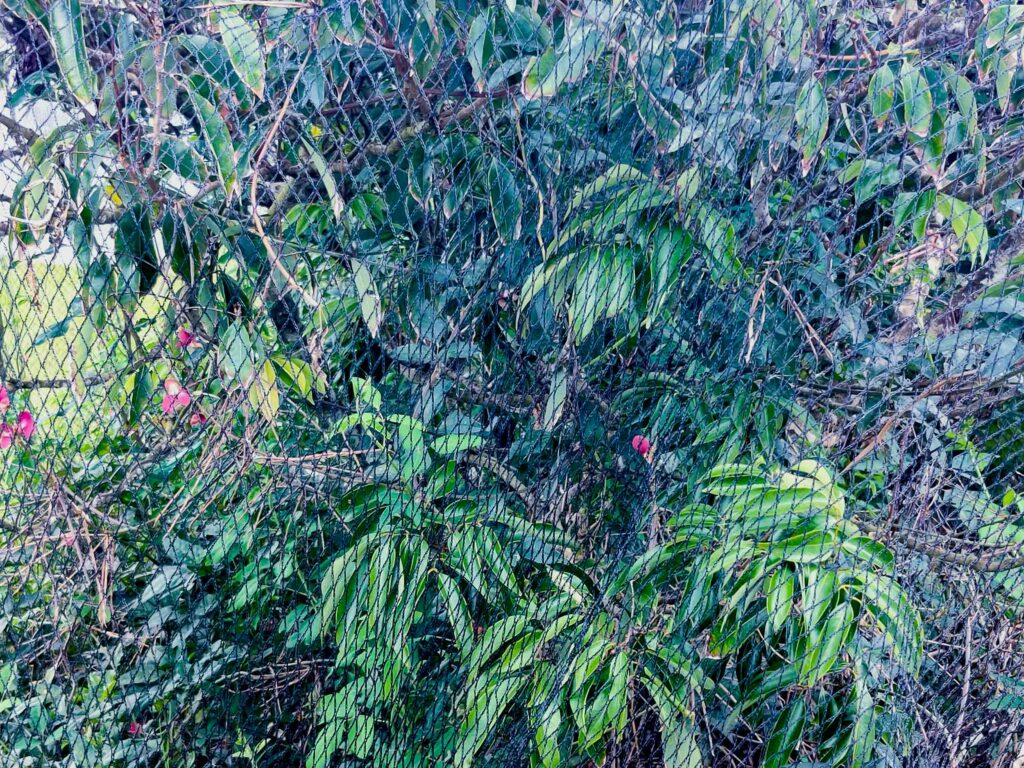
Invisible black netting 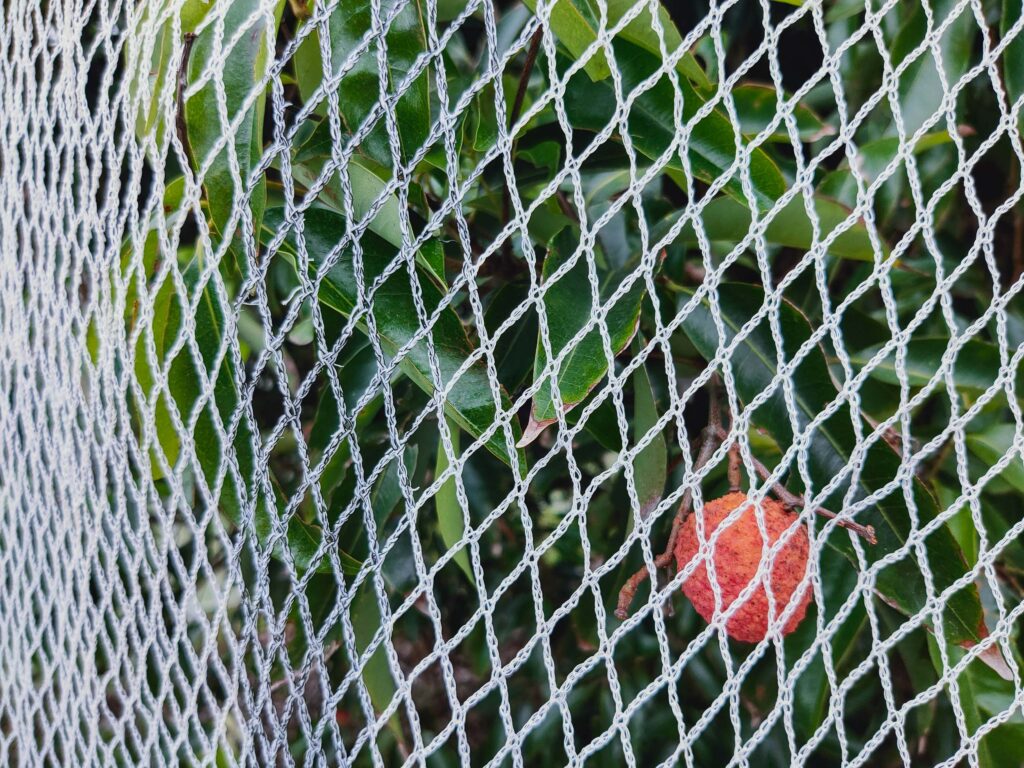
More visible but with holes TOO large
It causes terrible injuries to entrapped wildlife which often result in a cruel slow and horrific death.
Possible Solutions To The Problem
There are many methods that one can consider to bat-proof your fruit trees from hungry flying foxes:
- Re-planting native habitat with Flying-fox friendly fruiting trees for them would certainly reduce the problem
- Safe Flying-fox exclusion methods
- Flying-fox repellents
Exclusion Methods
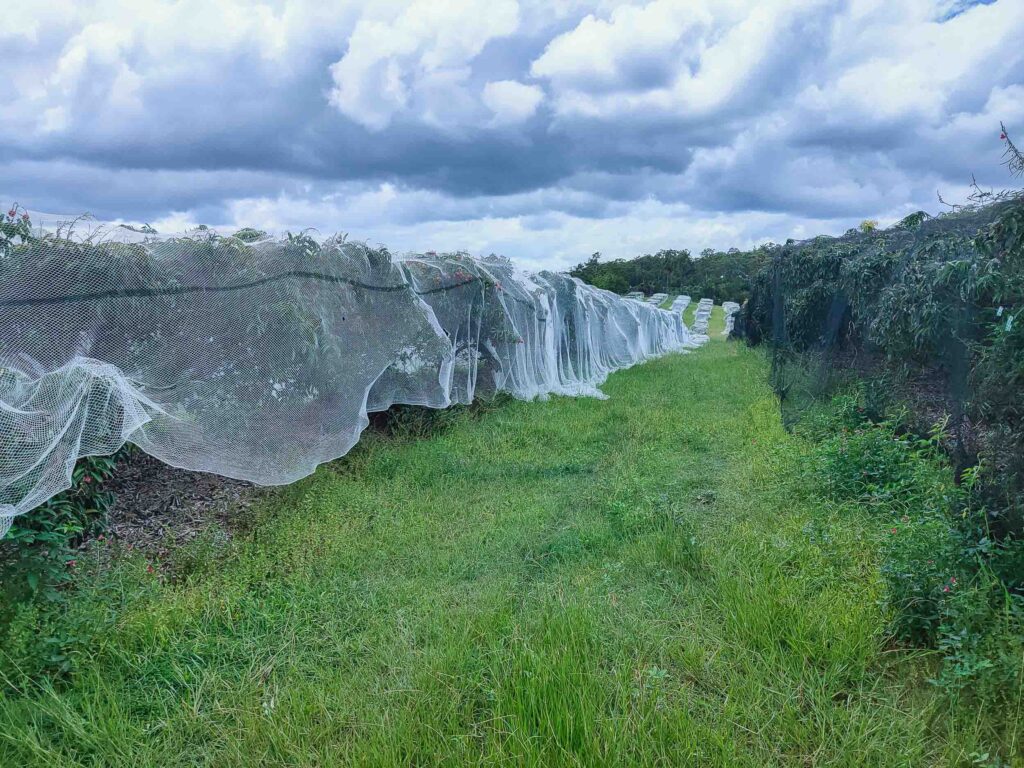
Wildlife Friendly Netting
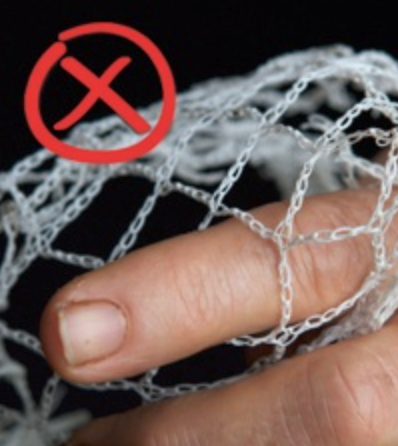
If you can poke your finger through it, this is a BAD NET.
There are many wildlife friendly netting methods to protect your fruit.
The best is a dense woven white net that doesn’t trap wildlife and has no need for a frame.
A variety of wildlife friendly netting are now available, including Hail Guard, FruitSaver or VegeNet, for example.
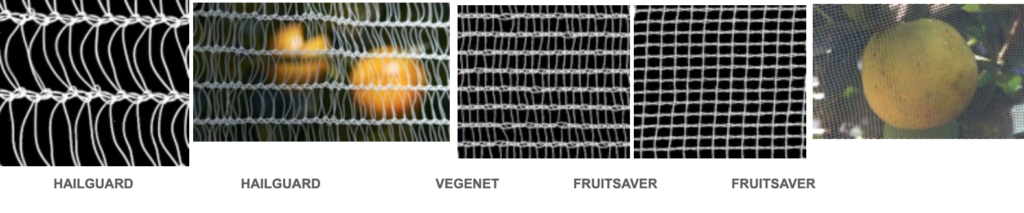
If you must use netting, individual fruit trees can be protected from wildlife by using durable light-coloured or preferably white knitted netting. These types are more easily visible at night to nocturnal animals.
For much more detailed information read Wildlife Friendly Netting.
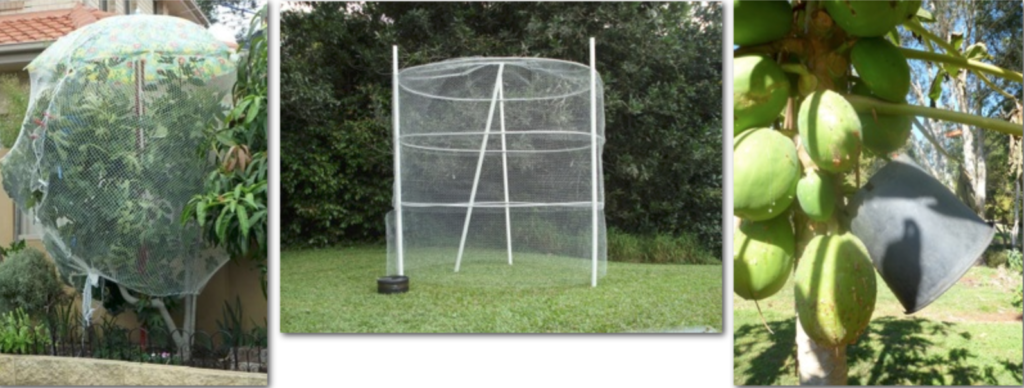
Frame Your Netting
If you need a frame, then the net must be stretched tightly over it. An adult flying fox can weigh upto 1 kilogram. So netting MUST be able to withstand the ‘bounce’ test.
When you push your hand onto the netting it should not cave in around your hand. Otherwise, a bat could still become entangled by the net collapsing on top of it.
An easy way to do this is using lengths of metal, timber or poly pipe which can be inserted over star pickets driven into the ground. Spacer bars of pipe or wood can be used to stabilise the frame at the top.
Stretch the mesh (mesh size no more than 5mm square) tightly over this frame. Then peg it securely to the ground.
Use Of Shade Cloth
Another temporary alternative is to throw 30% block out shade cloth over the tree while it is in fruit. This will not prevent the fruit from ripening but will deter animals and birds.
A piece of 30% fine woven shade cloth can simply be pegged into place as an easy temporary deterrent.
Fruit Protection Bags
Fruit can also be individually bagged on the tree to protect it.
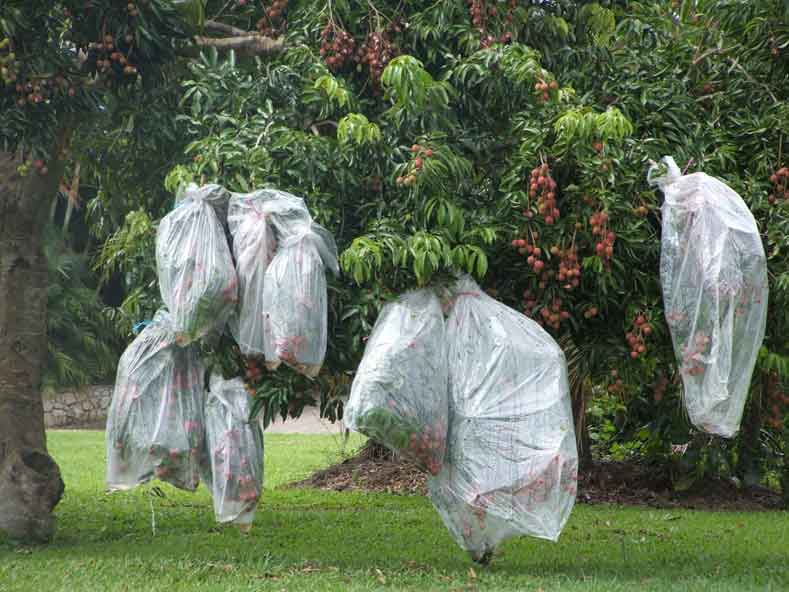
Paper bags or other fruit protection bags (eg. Green Harvest or The Native Shop) tied over the fruit can work well with a small crop.
You will need to monitor and change these bags or shade cloths regularly as they may get damaged by rain or torn by winds. Some people even use plastic garden pots as an alternative!
For more information read or download this pdf: Protect Your Garden Fruit In A Wildlife Friendly Way
Repellent Methods
Hang Distracting Objects
There are many types of decoys to discourage flying foxes from your fruit trees. These include tin foil, mirrors, and reflective old CD’s for example. Some lights and sounds can also act as a repellent.
Natural Repellents
There are some smells that deter many animals including bats, especially microbats. Strong eucalypt, peppermint and spearmint oil, menthol such as Vapour Rub or moth (naphthalene) balls can deter the latter especially.
Ultrasonic or High Pitch Sound Repellents
Look out for commercially available bat ultrasonic or high pitch repellents. They may not be the cheapest method but they may cover a large square meterage. They are well worth the cost if you have a substantial sized area to cover.
However they may be most successful with echolocating microbats rather than flying-foxes. This is because they disrupt the sound waves microbats use for echolocation of their prey.
Lighting Systems
Some people have reported a degree of success using for example, sensor lights as a deterrent method. Flying foxes are a shy nocturnal species and tend not to like strong lights.
Shining a bright light on the spot in question for a week or more may thus have some success. However this could attract microbats in to feed on the insects which would be attracted to the light.
[Photos courtesy of www.wildlifefriendlynetting.com and Tony Isaacson]