
THE PROBLEM WITH BARBED WIRE
Barbed wire is an icon in the Australian landscape that has remained unchallenged for too long. Whilst fencing is integral to good land management, it needs to be done in a way that is wildlife-friendly.
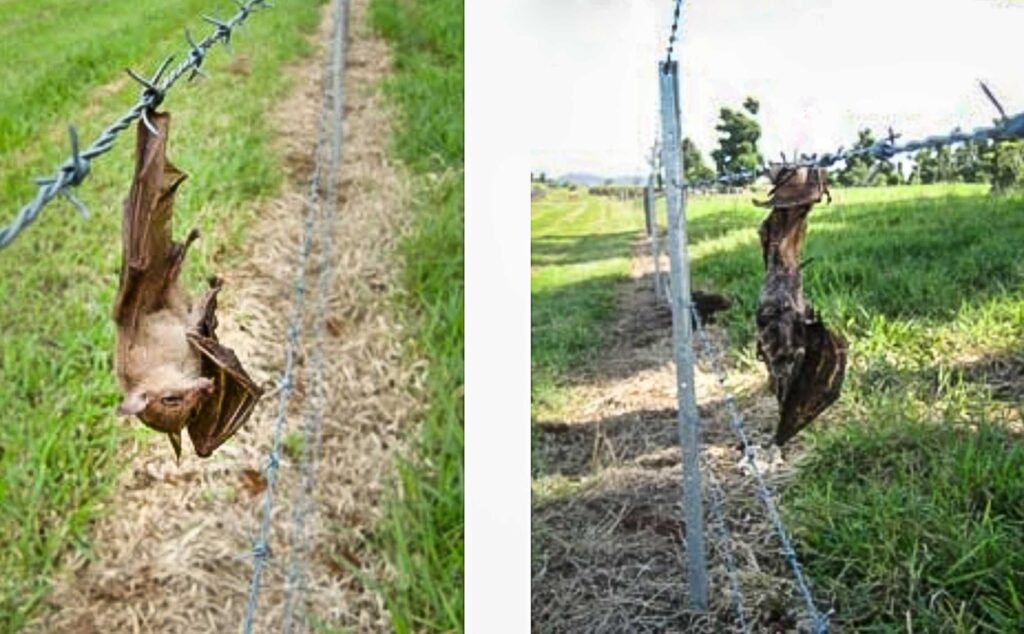
More than 60 Australian wildlife species have been identified as occasional or regular victims of barbed wire fences. It is not just our Flying-foxes at risk that need rescuing.
There is also the damage to valuable livestock and injury to humans to take into consideration too.
Each year thousands of these animals face a cruel death or permanent disability from entanglement. The wires are invisible to them especially at night.
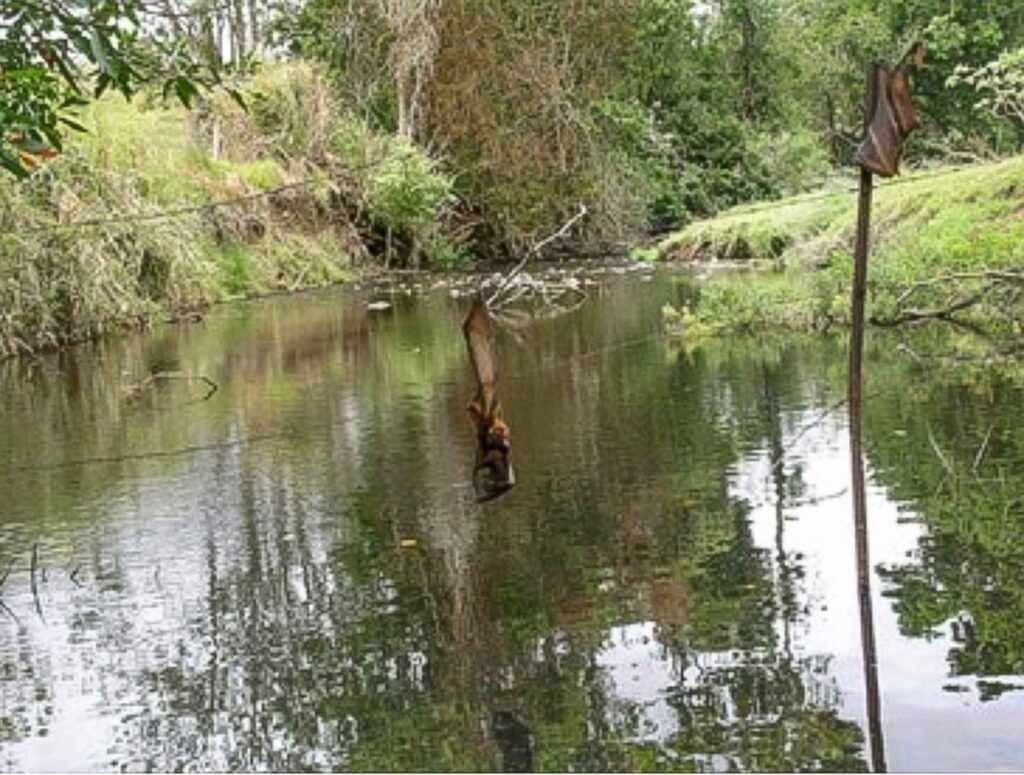
So all nocturnal animals such as bats, gliders and raptors are especially at risk. And many of the survivors result in being euthanised as they are un-treatable or un-releasable.
WILDLIFE FRIENDLY FENCING PROJECT
In September 2006 Bat Rescue’s Far North Queensland counterparts, Tolga Bat Hospital, received a grant from the Threatened Species Network of the World Wide Fund for Nature (WWF) to commence the Wildlife Friendly Fencing Project.
The long process of raising public awareness of the impact of barbed wire on all wildlife began. Especially those under serious threat of extinction.
The funding targeted North Queensland, in particular the Atherton Tablelands and South-East Queensland. The flagship species for the project were the Spectacled Flying-fox, Grey-Headed Flying-fox and Mahogany Glider.
Bat Rescue Inc. administers Wildlife Friendly Fencing Project activities in South-East Queensland. This is in partnership with Tolga Bat Hospital (Atherton Tablelands) and Bat Conservation & Rescue (BCRQ, Brisbane).
Please visit www.wildlifefriendlyfencing.com for detailed information on the project. And to get some ideas on how you can help.
WILDLIFE FRIENDLY FENCING
There are many non-harmful fencing alternatives available that minimise the likelihood of harm to wildlife. These are safe and effective fencing methods that will not endanger or entangle livestock, people or wildlife.
Identify if you have a property with some likely offensive fencing that needs modifying. Then perhaps start by prioritising a possible action list to address:
- A fence with a known history of entanglement
- Any fence in a recognised hotspot such as over water, on ridge lines or near feed trees
- Installing a new fence
FRIENDLY FENCING IDEAS
These can include considering removing the fence completely, if no longer serving a purpose. Or think about different types of fencing, particularly if you are replacing or building a new fence.
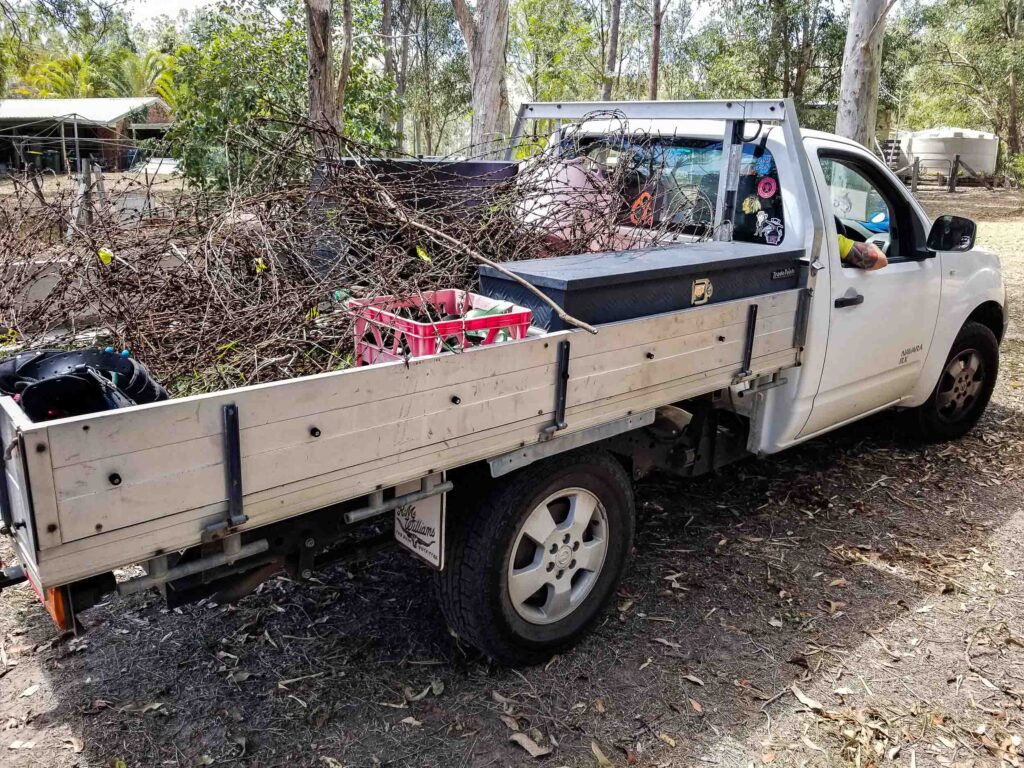
Some of these include white nylon fencing, plastic coated wire or even glow in the dark ‘Knightline’.
- Friendly Fencing – plain wire
- Friendly Fencing – split polypipe
- Friendly Fencing – electric fencing
- Friendly Fencing – virtual fencing
- Friendly Fencing – nylon wires
- Friendly Fencing – other ideas
- Friendly Fencing – improving visibility
- Friendly Fencing – over water
- Friendly Fencing – rollers
- Friendly Fencing – projects
ADAPTING PROBLEMATIC LENGTHS OF BARBED WIRE
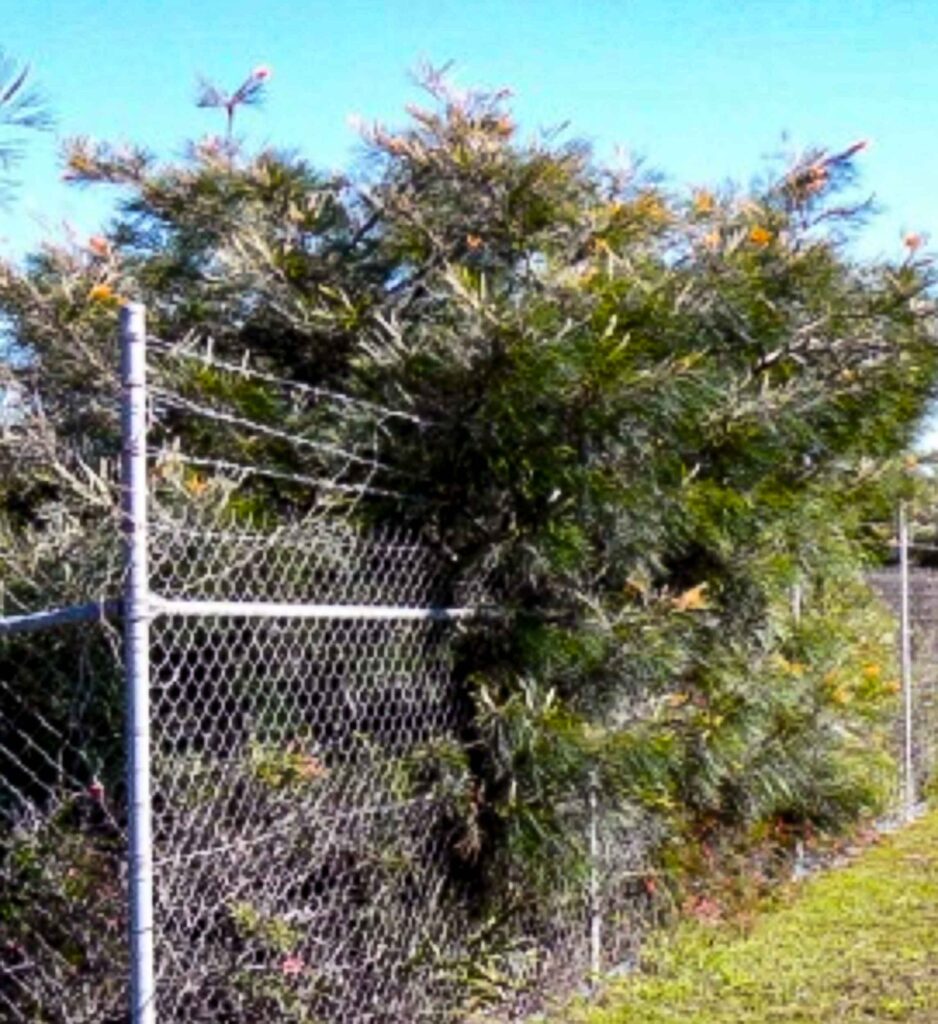
Barbed wire when close to fruiting or flowering trees and shrubs are the particular problem.
This is especially if they are not quite above fence height.
But even long grass grown next to fences can also prevent injury and entanglement.
If you have sections of fencing that are particularly prone to trapping wildlife, you can still adopt easy and relatively cheap methods to diminish that risk.
This can include fixing bright visible or reflective tags to that wire, especially the top offending strands. This can include shiny objects, metal tags, or even beer cans. Plastic bunting or flags placed at regular 30-40cm can also help.
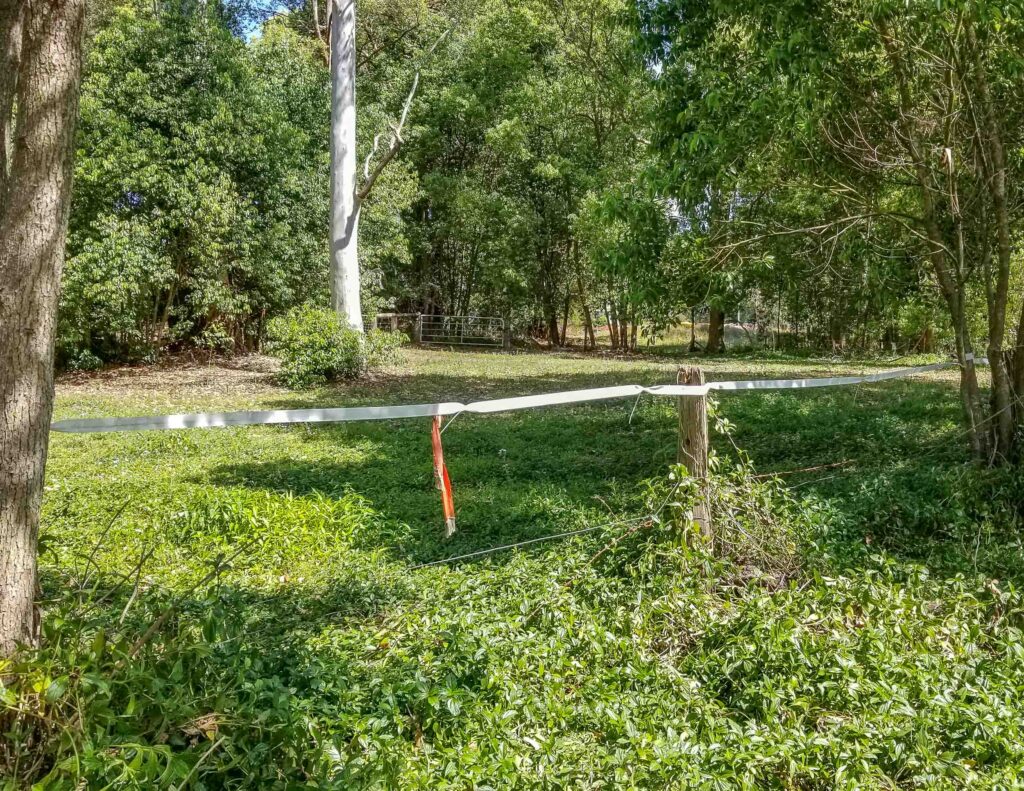
White poly tape eg. 40mm wide or white electric fence tape is relatively cheap. This can easily be attached to the barbed wire to make it more visible to nocturnal animals.
Even splitting a length of poly pipe and covering that stretch of offensive barbs on the wire is also a solution.
[Photos courtesy of www.WildlifeFriendlyFencing.com and Irene Isaacson]