
MICROBAT RESCUES
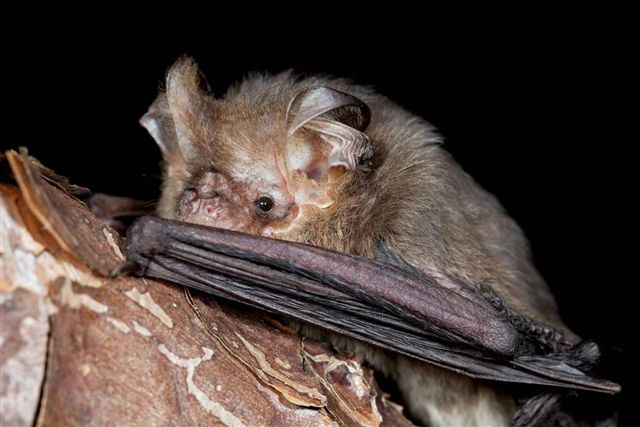
Due mostly to their size, there are far fewer human-bat encounters with microbats than with the megabats. However there are still significant hazards requiring a rescue.
Types Of Rescues
The situations that most often arise with microbats are as follows:
Colonising A Roof Or Walls Of Dwellings
This is the most common complaint about microbats and sometimes requires considerable effort to rectify the situation.
For a colony of microbats living under roof tiles, check this out! https://giphy.com/embed/gdGhAKh9fMOvC
The technique is one of exclusion rather than removal. Then the roost site can be replaced with an alternative roost site, such as a microbat box.
For more information, read: Bats in Your Belfry
Roost Site Disturbance
This occurs when a tree, cave, tunnel or other structure that the microbats are inhabiting is disturbed for whatever reason and the bats are displaced.
When the hollows of branches get lopped by well meaning gardeners or local Councils, it is dreadful to even ponder the fate of bats living within it.
Whilst Bat Rescue is more about rescuing bats, we are often called upon to help relocate animals. And for this we need to obtain a special ‘damage mitigation’ permit.
Domestic Pet Attack
Microbats are often mouse-sized when fully grown or smaller. Due to their small size they are an easy target for cat or dog attacks.
This is more so if they are found foraging on the ground for insects. Injuries inflicted by domestic pets are usually, but not always, fatal.
Becoming Trapped Indoors
This happens when windows or doors are left open. Or for any other reason a microbat finds itself trapped inside a house or shed. And it can be days before the bats are eventually noticed.
A rescuer will thus usually need to rehydrate and feed the bats for up to several days prior to release.
Sometimes microbats will colonise unused chimneys and surprise a homeowner who lights a fire underneath them! They become disorientated and may come down into the house itself, requiring capture and relocation outdoors.
There are also times when microbats are hit by overhead fans, generally resulting in bad fractures.
Fly Paper
An old but sadly still used ‘goodie’ when it comes to catching pesky flies in houses.
But these are awful when it comes to microbats. When microbats fly into these sticky strips of fly paper, they get trapped too.
Not only is it a tedious process removing the sticky substance from their bodies. The glue can be quite toxic too, especially if they try to lick it off themselves.
Any microbat caught on fly paper requires URGENT Veterinary care.
Canvas Garden Or Pool Umbrellas
These are fairly common around areas that have swimming pools and are often combined with a swimming pool rescue too!
Microbats in small numbers are often attracted to closed-up canvas umbrellas. Therefore their presence is only detected when the umbrella is opened or droppings are noticed on the table or decking below.
We usually advise people to leave the inhabited umbrella open overnight. And then remove it for a few days. Putting up a microbat box as a replacement home is also a great idea!
BABY MICROBAT RESCUES
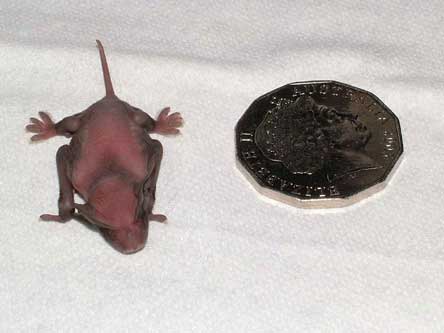
Far fewer baby microbats come into care when orphaned. And when they do, the most common cause is due to roost site disturbance.
Occasionally they are found on the ground, presumably dropped by their mothers.
Relocation of house-dwelling bats cannot be conducted until babies are independently flying (around at least March-April).
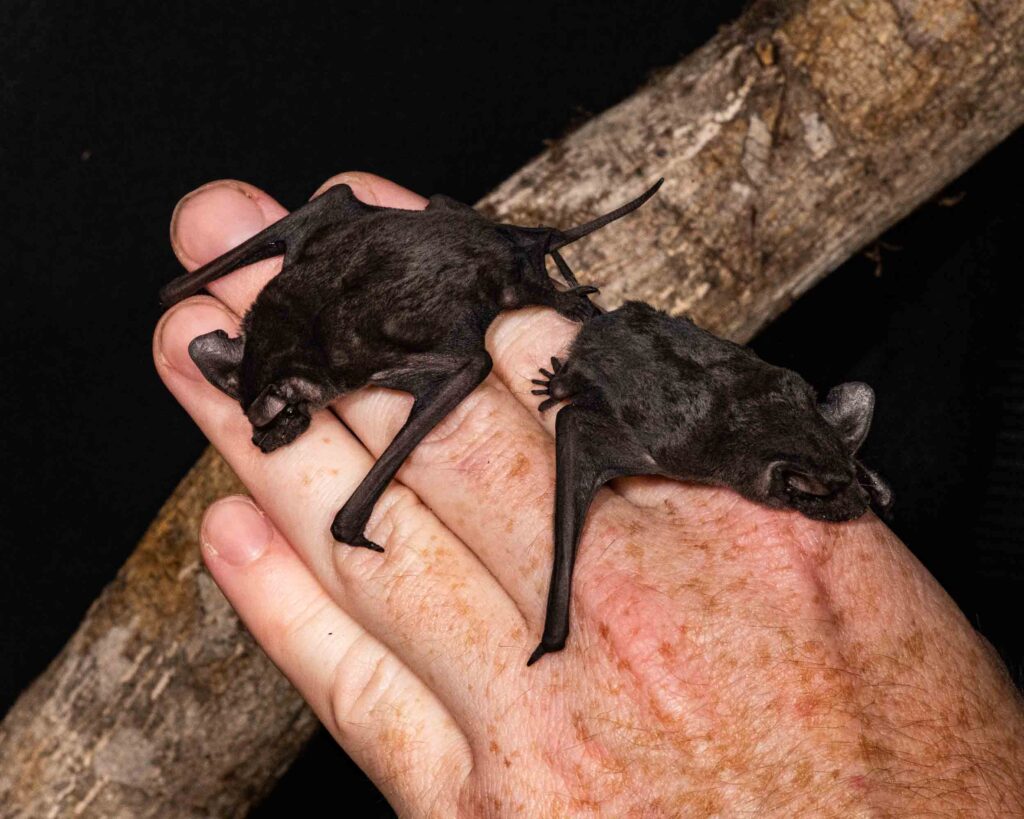
Two baby Eastern free-tailed microbats 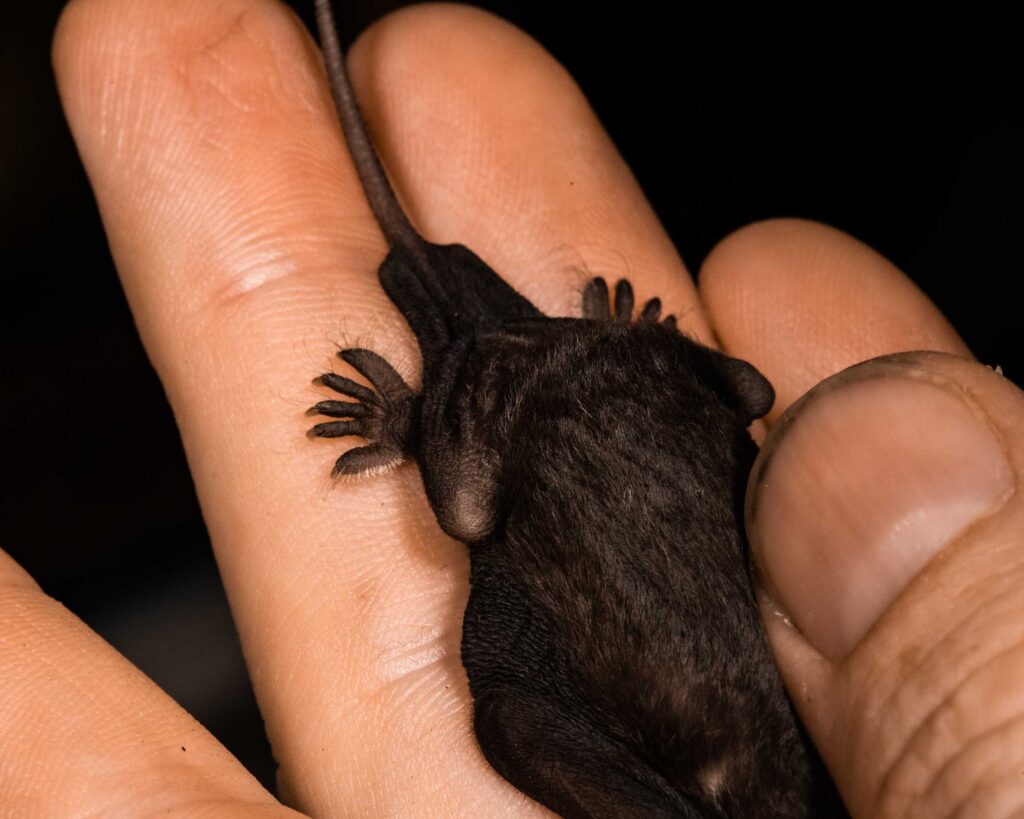
With tiny hairy feet!