
Introduction: About Bats, The Most Ancient And ONLY Flying Mammal On Earth
Bats as we know them today have been on earth for at least 55 million years. Their evolutionary origins are a subject of debate. Fossil records about bats are rare due to their delicate bone structures.
Bats are the only mammals capable of sustained flight and are perfectly adapted to achieve this.
Bats belong to the order Chiroptera (meaning “hand winged”) and are divided into two sub-orders, Microchiroptera and Megachiroptera.
There are many excellent sources of information available about bats.
However, the following is a brief introduction to their special characteristics.
MICROBATS (Microchiroptera)
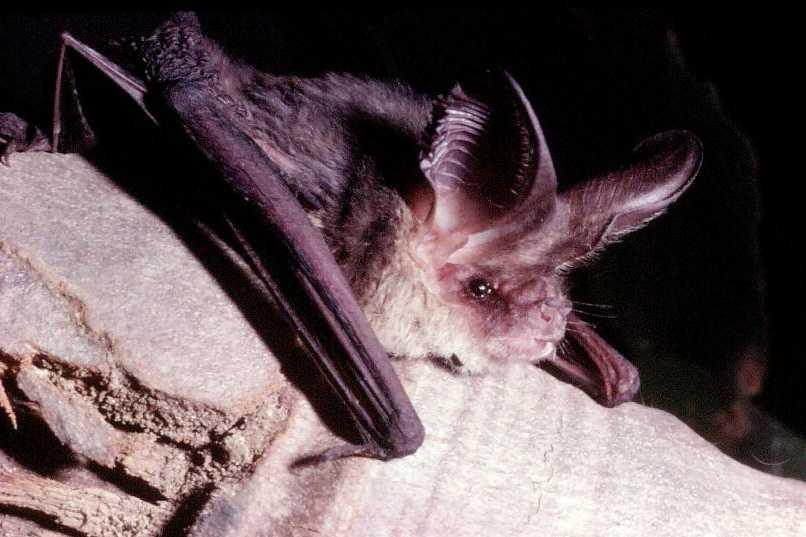
Microchiroptera microbats are small, mainly insectivorous bats which navigate and feed using echolocation. The smallest is the bumble bee bat from Thailand weighing 1.5gms.
It is believed that microbats evolved from a shrew-like ancestor being born blind and without fur. In Australia we have approx. 63 species of microbats.
They live in a range of habitats including tree hollows, caves, roofs and walls of houses. However they change roost sites often to avoid predation.
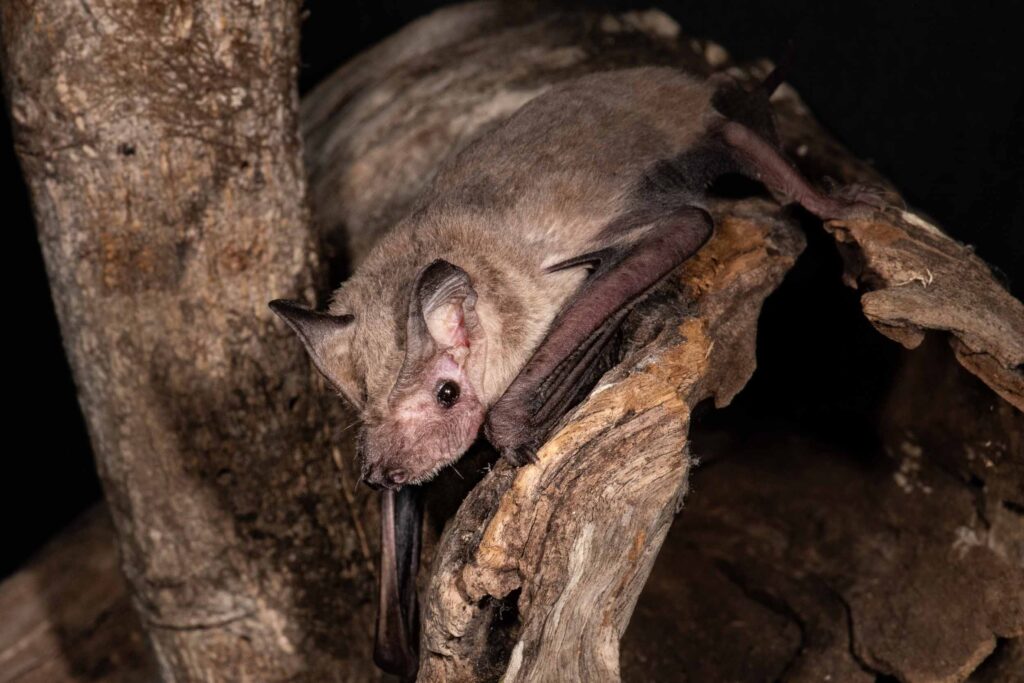
They give birth to a single young (some species have multiple young) through October to December. Microbat babies or ‘pups’ can be born weighing up to one third of their mother’s weight!
So when they become too heavy to be carried, they are left behind in the maternity colony. These colonies can consist of a small number of animals or several thousand.
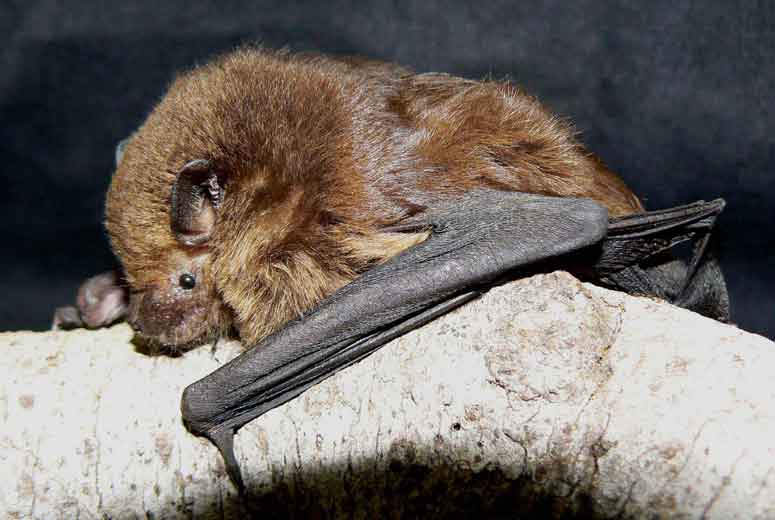
Microbats could be considered nature’s can of Mortein as they consume thousands of insects in one night. Although most microbats are insectivores, there are also some carnivorous species.
Some larger species even prey on smaller species. And there is even a fish-eating microbat that scoops small fish out of the water with its oversized feet!
Torpor
Some microbats have a unique way of conserving the energy they need to sustain flight while feeding and echolocating. They go into what is called ‘torpor’.
They do this by lowering their body temperature. This in turn lowers their breathing and heart rate.
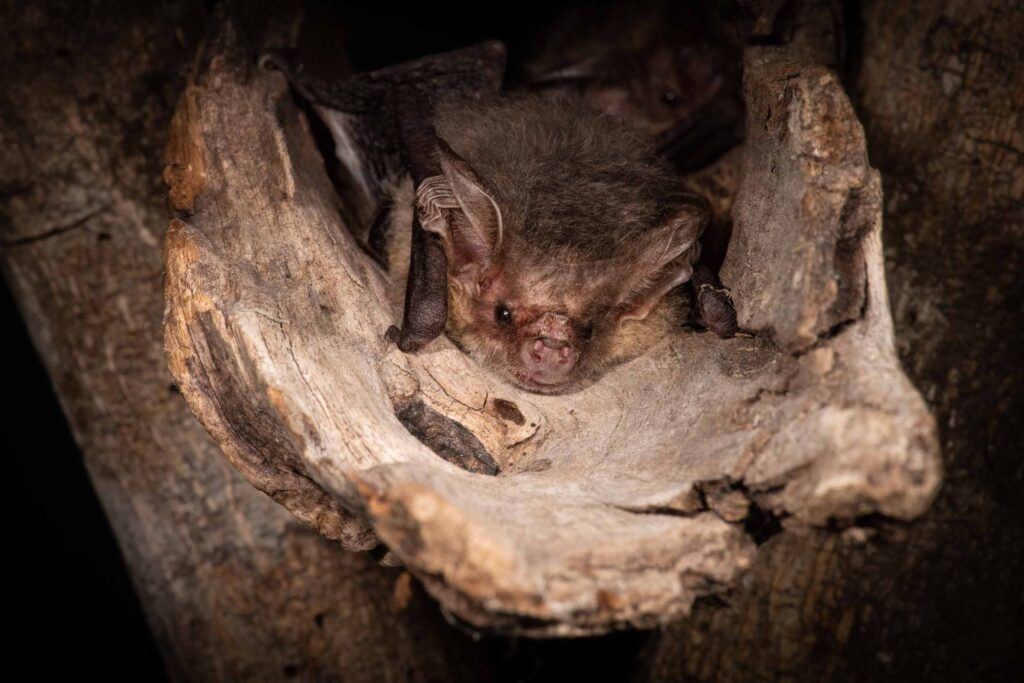
When in torpor, they can appear almost lifeless as they barely move and are cold to the touch. This happens frequently in colder months when food is scarce. And whilst in this defenceless state, they can be preyed upon by predators.
Echolocation
The system known as ‘echolocation’ is a highly sophisticated method microbats use to generate information about their surroundings.
It’s achieved by emitting high frequency sound waves through their mouth and nostrils. Listening for the echo bouncing back from surrounding objects gives them a sense of what is around them.
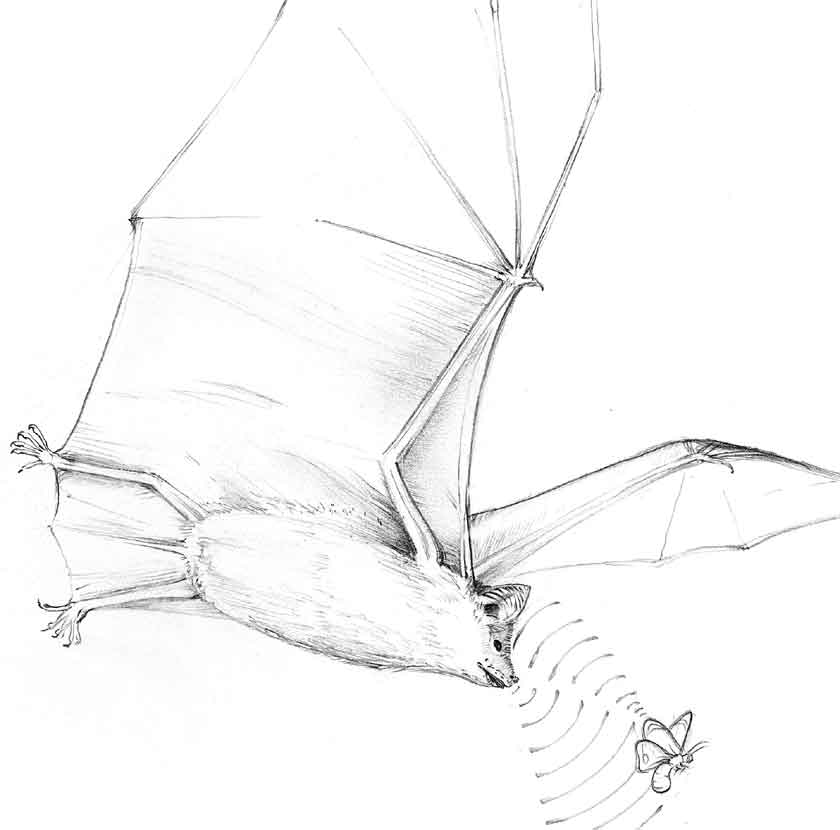
These can be large solid objects they are navigating around or even tiny fruit flies they are hunting to eat!
It is difficult to imagine how microbat brains interpret this information to form a perfect picture of their environment.
For example, the echoes bouncing back can tell them the distance from their prey. Even the size, shape and the speed it is travelling.
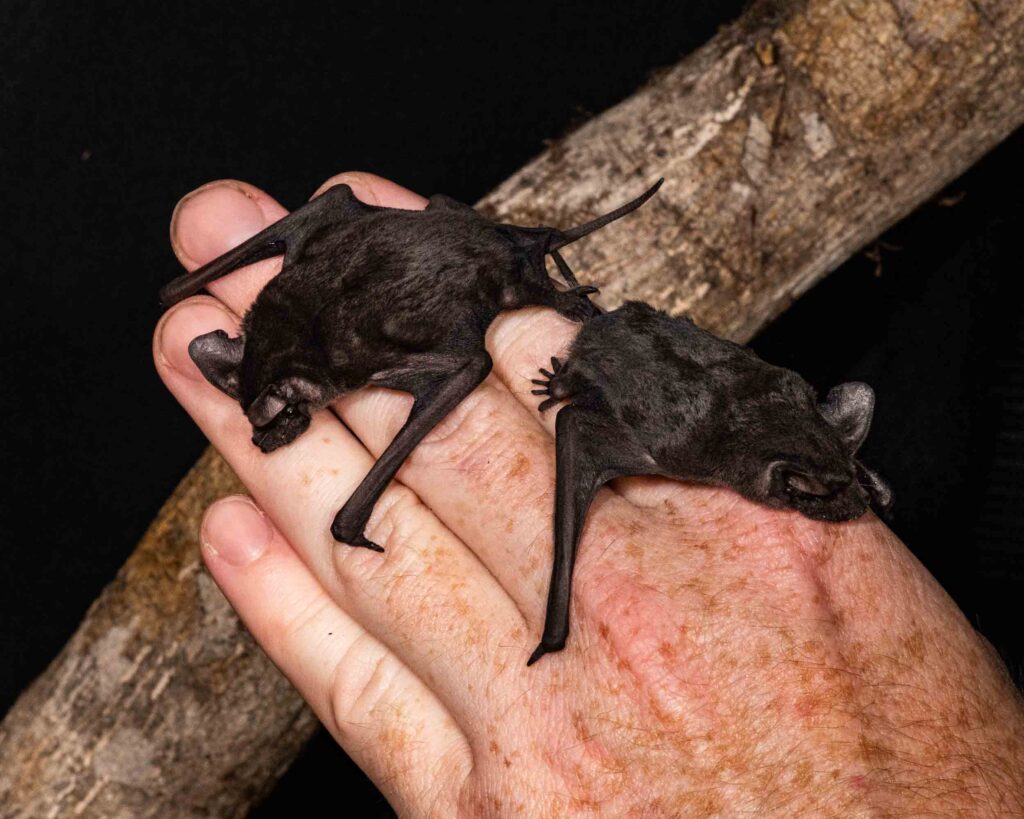
Two baby Eastern free-tailed microbats 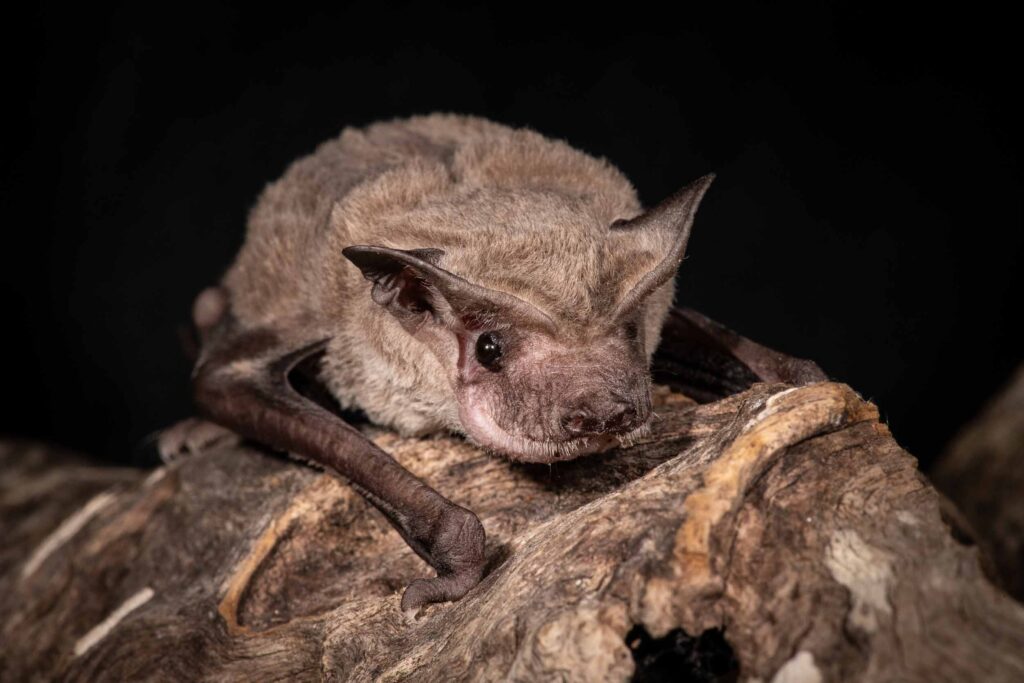
A Northern free-tailed microbat
The sound waves need to be high frequency to get the detail back they require. So they are well above our hearing range.
There are also very elaborate facial features on some microbats such as nose leafs. These help to direct echolocations calls. It’s truly an amazing feature and is the subject of a great deal of study.
Different species also have different frequency calls. Thus specialised equipment known as bat detectors have been designed to record these calls which help identify species.
MEGABATS (Megachiroptera)
These include Flying-foxes, Tube-nosed Fruit Bats and Blossom Bats. The Flying-foxes are the largest bat in the world.
They are fruit and nectar eating bats and navigate to find food principally by sight and smell. They are often called the ‘hippies’ of the bats as they are basically vegans!
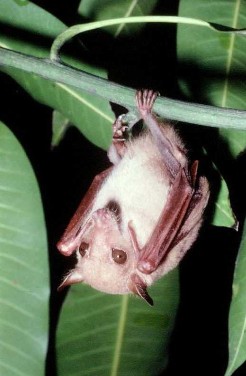
A mouse-sized Blossom bat hiding in foliage. They feed mainly on nectar and pollen rather than fruit.
The largest is the Indian Flying-fox or Pteropus giganteus found in India but also Pakistan and Burma. It weighs up to 1.6kg, and has a huge wingspan of 1.7m.
It is argued that megabats may have evolved from a primate ancestor. But the jury is still out on this one.
Briefly, the major points of debate are:
- Flying-fox young are born fully furred and with their eyes open
- Vision and other neural pathways in Flying-foxes are identical to primates
- The retractable tail bone in the foetus is identical to primates
- Flying-foxes are highly intelligent animals, another key factor in a possible link to primates.
The Important Environmental Role of Megabats
Megabats play a very important role in pollination and seed dispersal of our native forest species.
Deforestation along with direct culling has resulted in a major decline in Flying-fox populations. This is to a point where some species are now listed as “Vulnerable”.
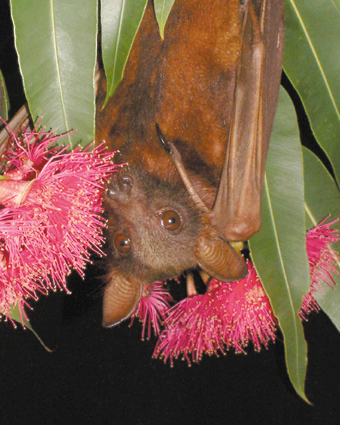
The long-term effect this in turn has on our native forests is a negative one.
Prior to May 2003, Queensland had one of the highest rates of land clearing on the planet (an average of 500,000 hectares per year). This resulted in killing more than 1 million birds, mammals and reptiles each year.
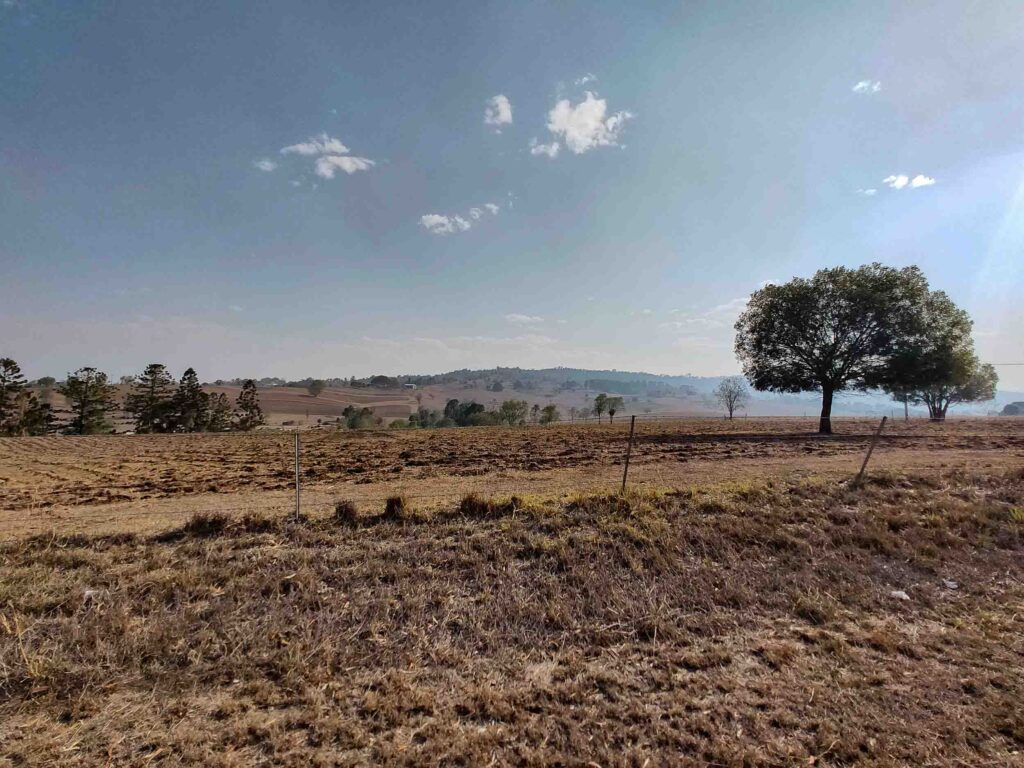
Environmental costs have been catastrophic. Species decline, dry land salinity, degradation of river systems and significant greenhouse gas production are to name a few.
But despite changes in Government Legislation in the last decade, South East Queensland remains in the top 24 offenders on the planet for deforestation.
It is THE only westernised offender on the list in a report from the World Wide Fund for Nature (WWF, Jan 2021).
To read more click HERE for the Summary of the Report : Deforestation Fronts – Drivers & Responses In A Changing World.
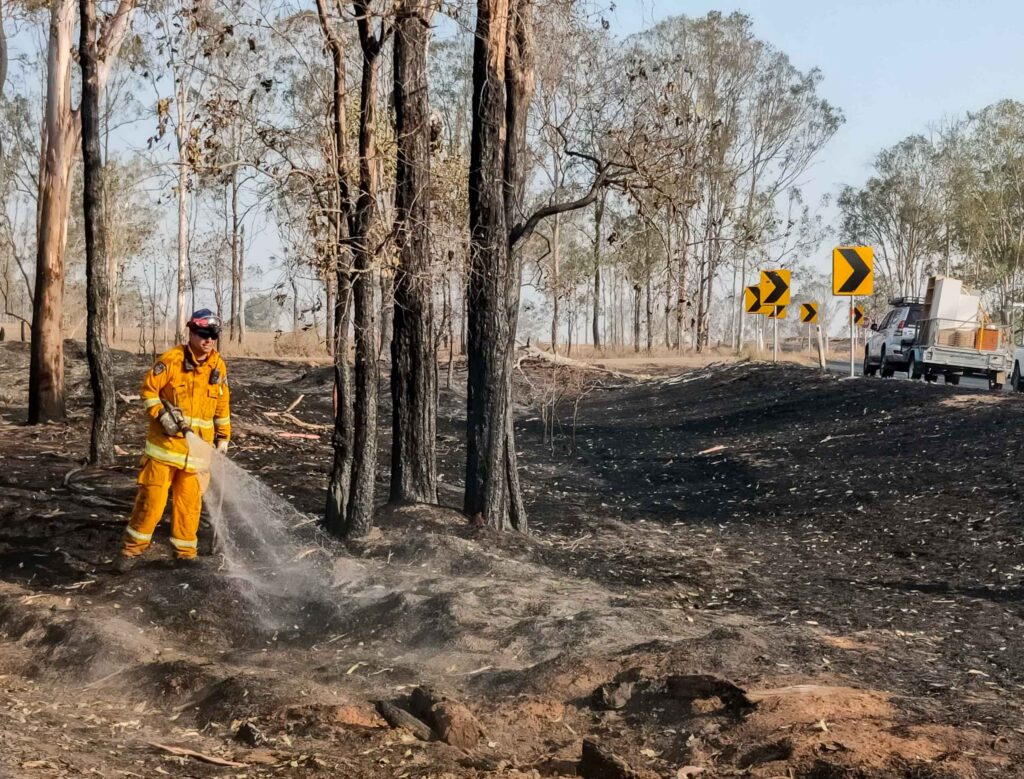
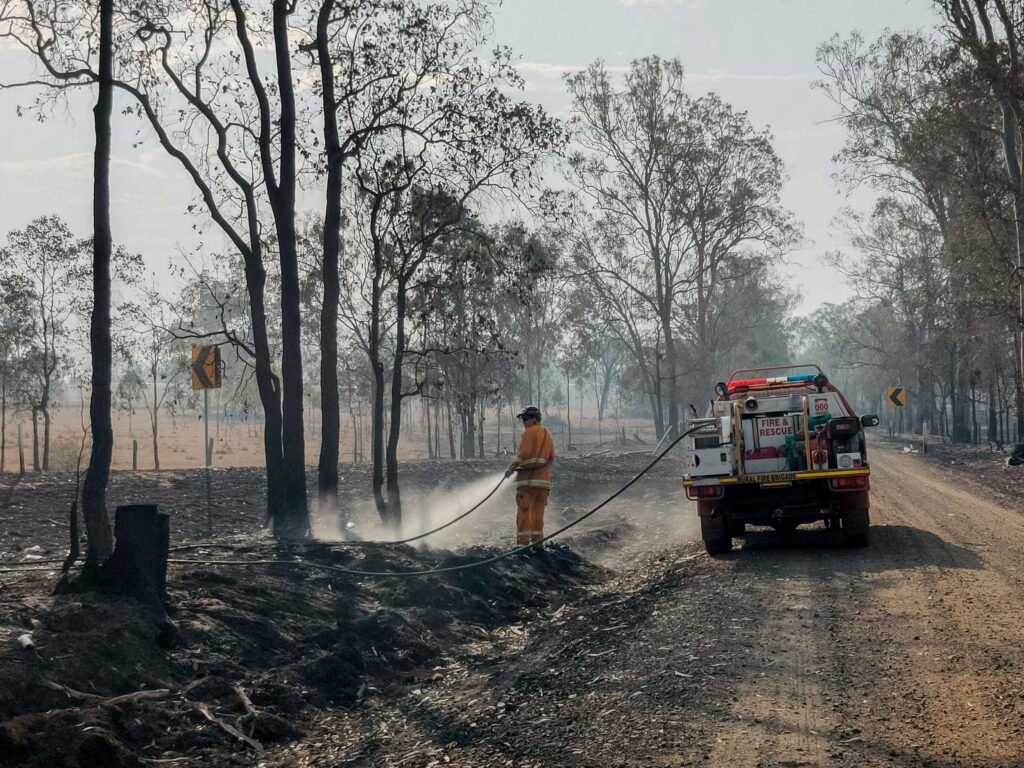
Add to this the recent devastating bushfires, floods and cyclones of 2019-2020 killed another 3 billion of our already massively depleted wildlife numbers.
South East Queensland Flying-Fox Species
In Australia, we have 13 species of Megachiroptera, eight of which are Flying-foxes.
But in South-east Queensland, we encounter mainly three species of Flying-foxes: Black Flying-Fox, Grey-headed Flying Fox and the Little Red Flying Fox.
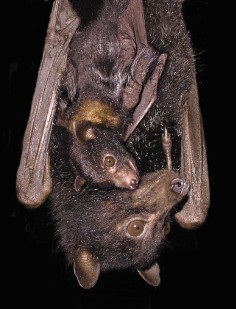
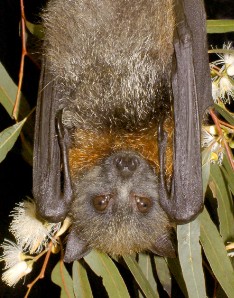
Occasionally we may also see the Eastern Tube-nosed Bat (Nyctimene robinsoni) and the Queensland Blossom Bat (Syconycteris australis).
Flying-Foxes are sociable creatures, living in large groups called colonies or camps. However Blossom Bats and Tube-nosed Bats are more solitary animals.
Is A Flying Fox A Bird Or A Mammal?
Flying-foxes are placental mammals. They are warm-blooded, deliver a furred (except for the abdomen and under their chin) open-eyed baby and they suckle their young.
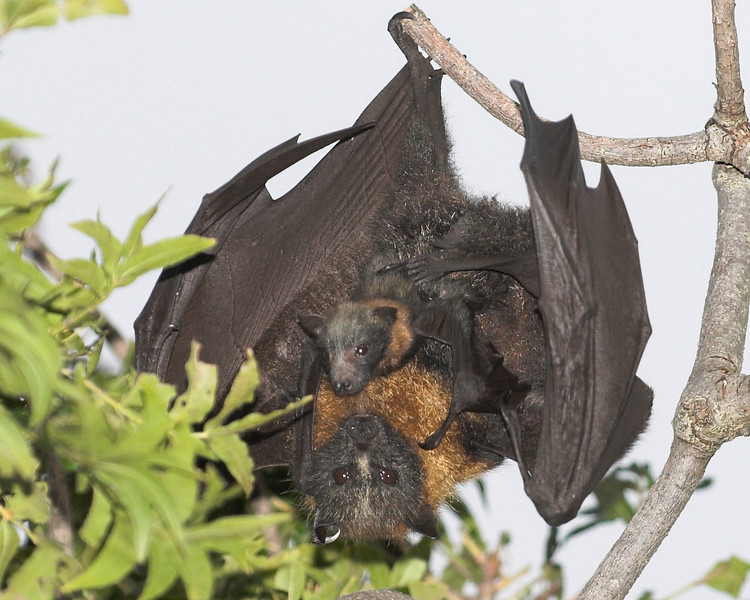
Their gestation period is approx. 7 months. Both Grey-headed and Black Flying-foxes are born in springtime, from late September through to November.
They usually only have one pup. But twins can be seen but very rarely survive.
Alternatively Little Red Flying-foxes give birth in our winter months of May and June.
A baby bat can weigh up to a third of its mum’s weight when born. It’s oversized feet and an extra little hook on the thumb hook and toenails help it cling to its mother. This is especially useful during flight, although babies can fall off mum at times (see Rescuing Baby Bats).
But by also latching on to mum’s teat located in her ‘wing pit’ (axilla), the baby or pup is generally carried very securely for the first weeks of its life.
From birth until 5-6 weeks old, a baby bat does not have the ability to control its own body temperature. This is called thermoregulation. By clinging to its mother and being wrapped in her wings, the baby is kept warm and secure.
The mother also keeps her baby scrupulously clean, using her tongue to lick and groom, almost like a cat!
Anatomy For Flight
Bats are not related to birds. In fact they are the ONLY flying mammal in the world. And they have very specific adaptions for this ability.
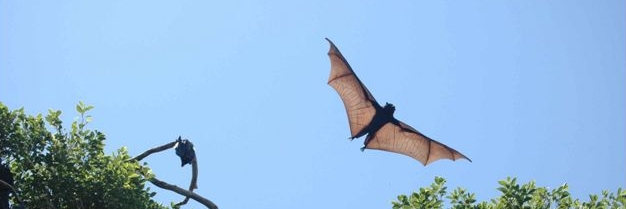
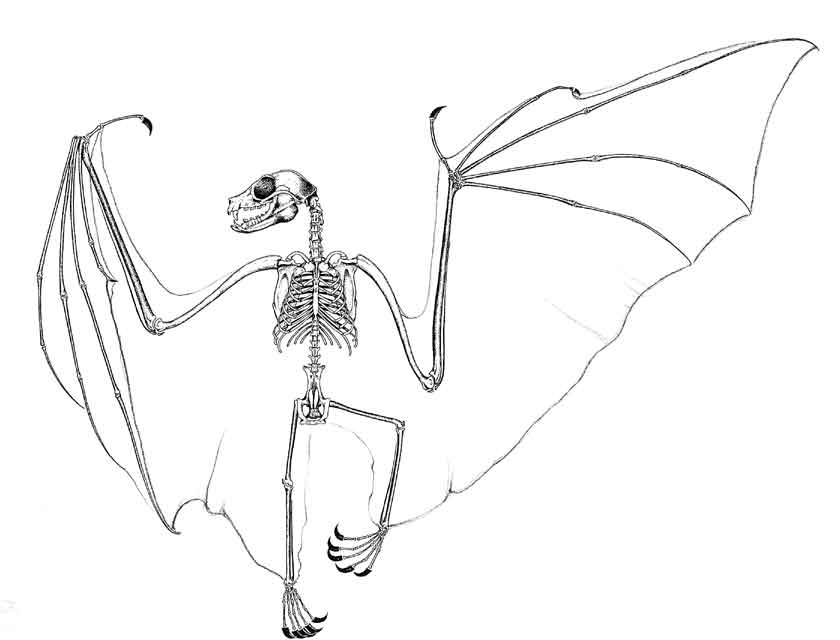
A Flying-fox’s arm and hand bones are similar to our hands. They have four fingers and an elongated thumb. On the end of the thumb is a hook, rather like a nail. This makes their thumb a very important tool.
They use this thumb hook to invert when they go to the toilet. It is a very good defensive weapon and also helps them climb. The hook is also used to bring food sources closer within reach.
Flying-fox bones are very light and their upper bodies very muscular to enable flight. These adaptations mean they have comparatively weak legs and cannot stand or walk upright.
Hence they must hang by their feet. You would think this would need a lot of muscle power. But in fact, it requires little effort due to leg tendons that ‘lock’ the claws in place on a branch.
So they can even sleep at night hanging without even thinking of holding on. Cool, eh?
[Photos contributed by Les Hall]