
WHAT TO DO IF YOU FIND A BAT
If you come across a bat in distress, please call the 24 hr Emergency Hotline – WILVOS (07) 5441 6200 as soon as possible. DO NOT delay. Time is a major factor in the success of any rescue of a bat.
For more information on what to do if you see a bat in distress, go to: Found A Bat
ADULT FLYING-FOX RESCUE SITUATIONS
Other than natural predation, inclement weather and food/water shortages, there are common man-made hazards that affect Flying-foxes in South East Queensland. These include:
- Electrocution and/or electroshock by power lines
- Entanglement in fruit netting
- Entanglement on barbed wire
- Entanglement by fishing line
- Cat or dog injuries
- Road traffic injury
- Cocos Palm entanglement
OUR RESCUE PROCEDURE
Most of our rescue calls come from a member of the public. The 24hr Emergency Hotline is manned 24 hrs, 7 days a week by experienced WILVO (Wildlife Volunteers Association Inc.) Members. They will collect as much information as possible from you regarding the incident.
Bat Rescue Inc. is then contacted immediately for any flying-fox or microbat in distress. A core of well trained and experienced Bat Rescue Members take those calls. This sets into motion a rescue plan, depending on the circumstances of the incident.
A rescuer or team of rescuers attend the scene as soon as possible. All our rescuers have vast experience in this specialised field of wildlife rescue. They all have to be vaccinated against Lyssavirus (ABLV).
Depending on the type of rescue, special equipment may include ladders, long nets and/or tools to handle barbed wire, fruit netting or fishing line.
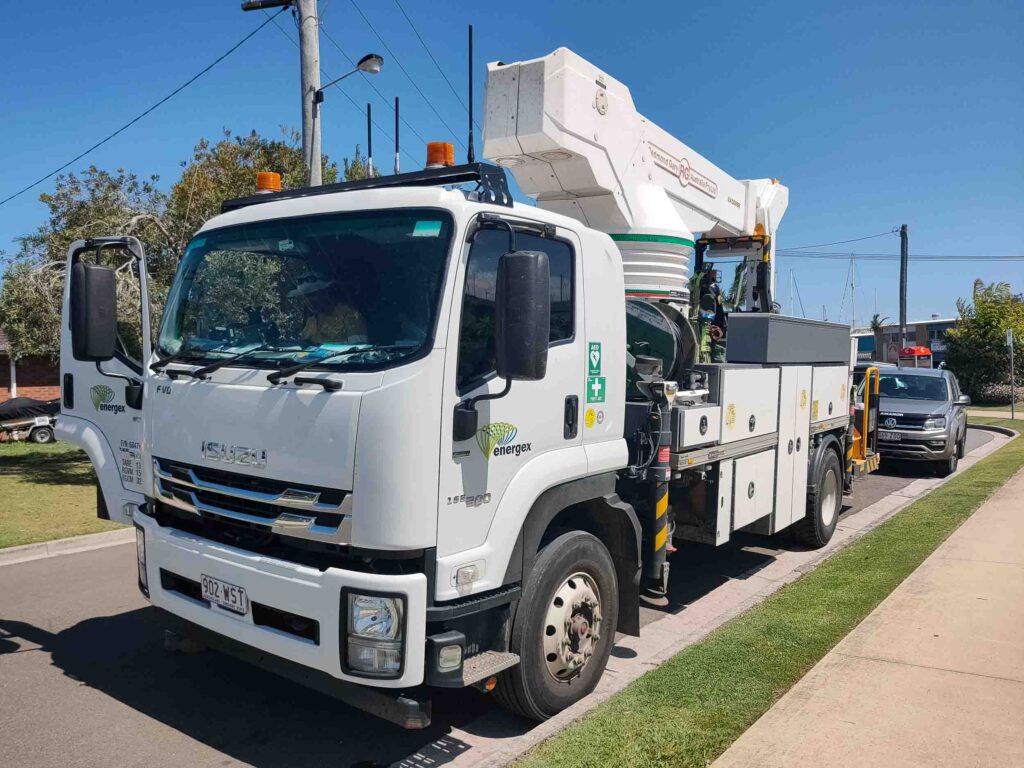
In the case of electrocution on power lines, Energex is also called so the electricity supply to the lines can be switched off temporarily to aid the rescue if necessary.
Rescues can thus take a few minutes or many hours depending on the circumstances.
Once the bat is safely retrieved it is placed in a specialised pet carrier. The animal is often triaged at the scene and/or taken immediately to a vaccinated Vet experienced in bat care for further assessment.
COMMON MISHAPS RESULTING IN FLYING-FOX RESCUES
Entanglement In Fruit Tree Netting
Fruit tree netting thrown loosely over a fruiting tree is a dangerous trap for all nocturnal wildlife, especially bats as they get tangled very quickly.
Once caught, they can suffer cruel and extensive injuries, even death, depending on how long and how badly the bat has been entangled.
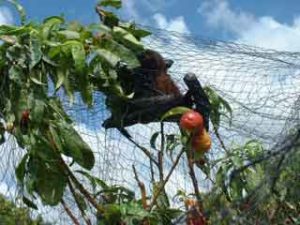
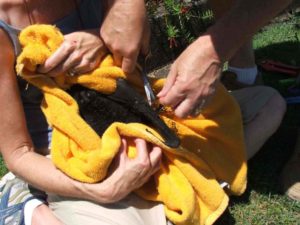
Inappropriate netting is unfortunately readily available in suburban hardware stores for backyard growers. And the danger to hungry wildlife is becoming a major threat to their survival. This is especially if people do not check their nets daily or erect them properly.
However, there are great wildlife friendly alternatives to using netting to protect fruit trees. These include densely woven nets with the right size of netting you cannot poke your finger through.
Protecting individual fruit with a range of now available bags and sleeves may also help.
For more information on how you can help and what steps you can make to prevent these unfortunate incidents, visit our page Use Wildlife Friendly Backyard Fruit Tree Protection.
Entanglement On Barbed Wire
There are kilometres of barbed wire across Australia and it not only affects flying-foxes but many other animals. It is largely nocturnal wildlife that is most at risk. And flying-foxes simply cannot see wire strands at night.
Many bat rescues from barbed wire entanglement occur where there is a nearby fruiting or flowering tree. They become caught on approach or departure from this food source.
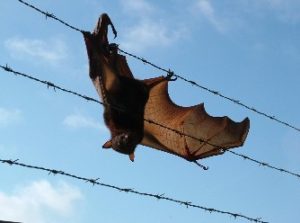
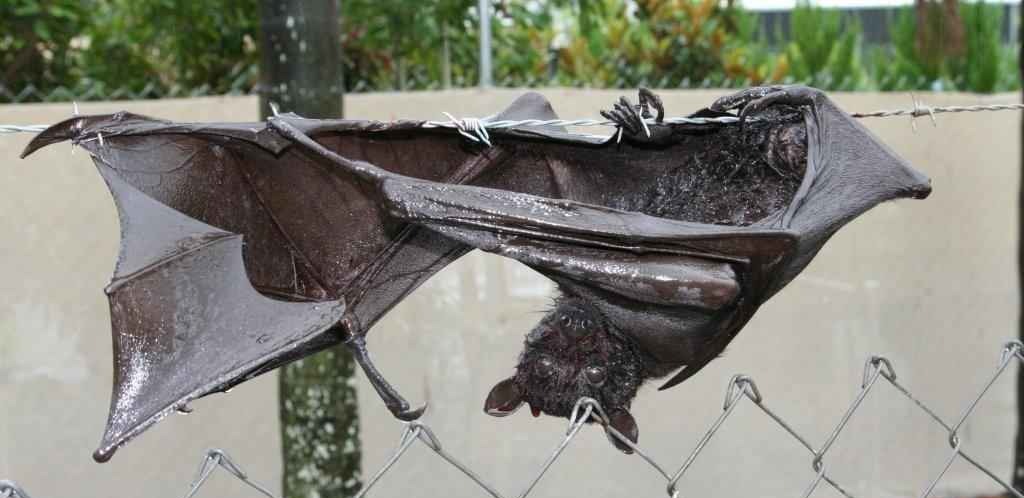
Once caught, they struggle to get free. This often causes a variable amount or type of wing damage and even broken bones. But worst of all, they bite the barbs to get free. This results in severe mouth and palate damage, often necessitating euthanasia.
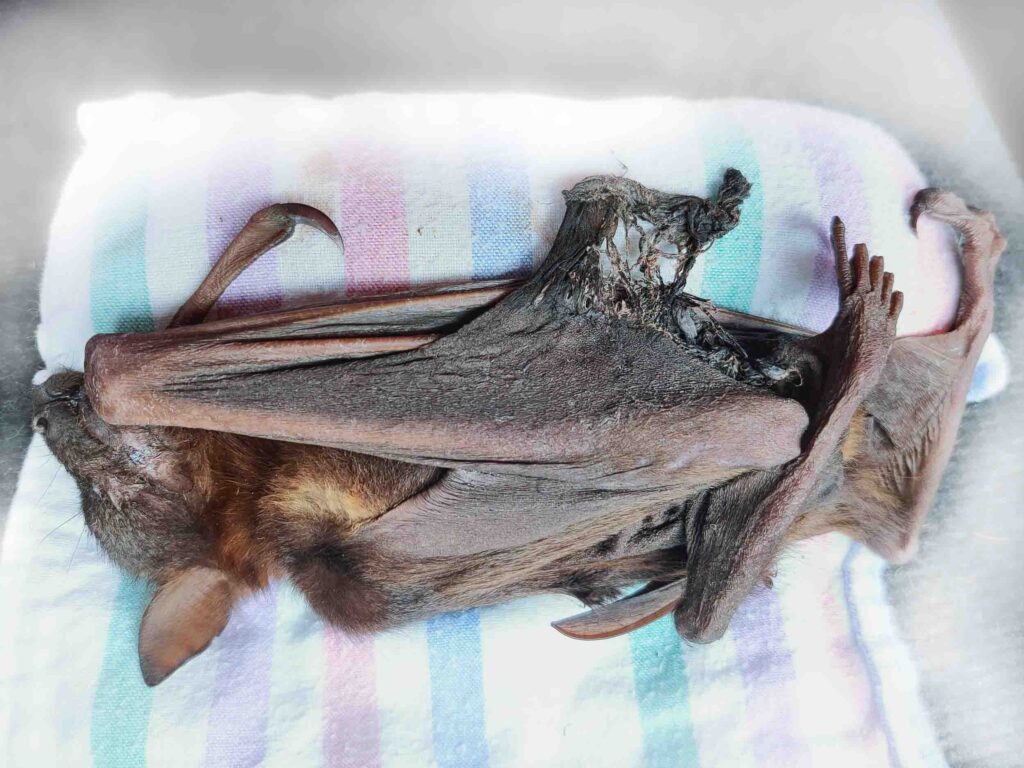
A long slow and painful death 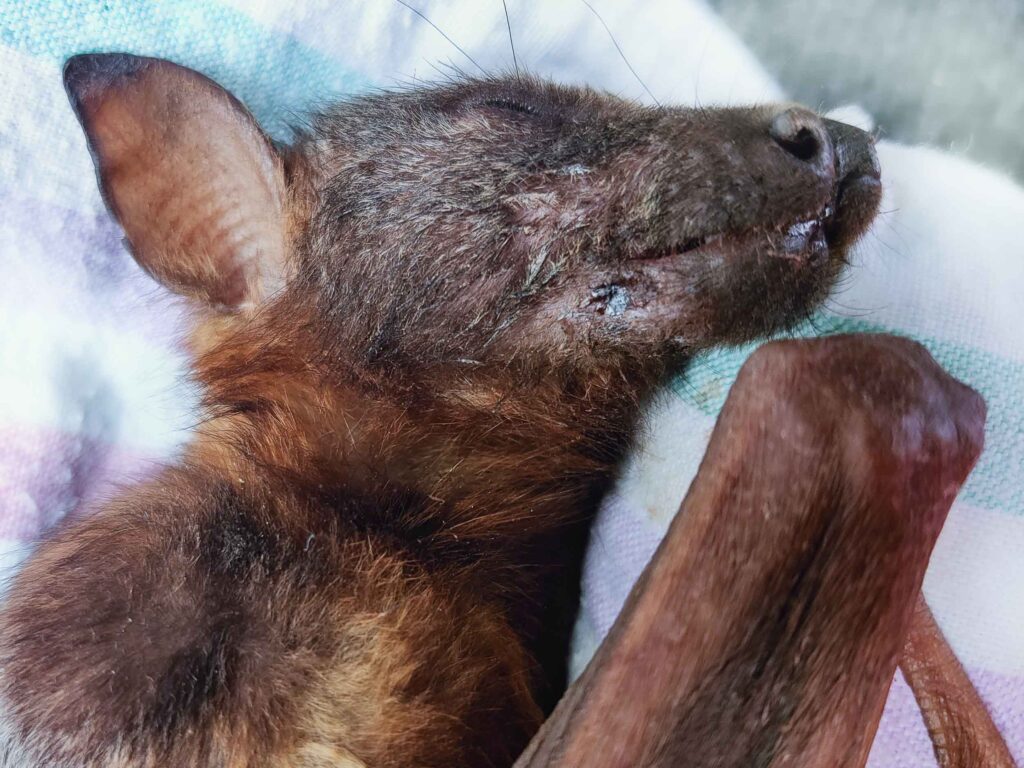
Facial injuries from chewing on the barbs to try to free itself 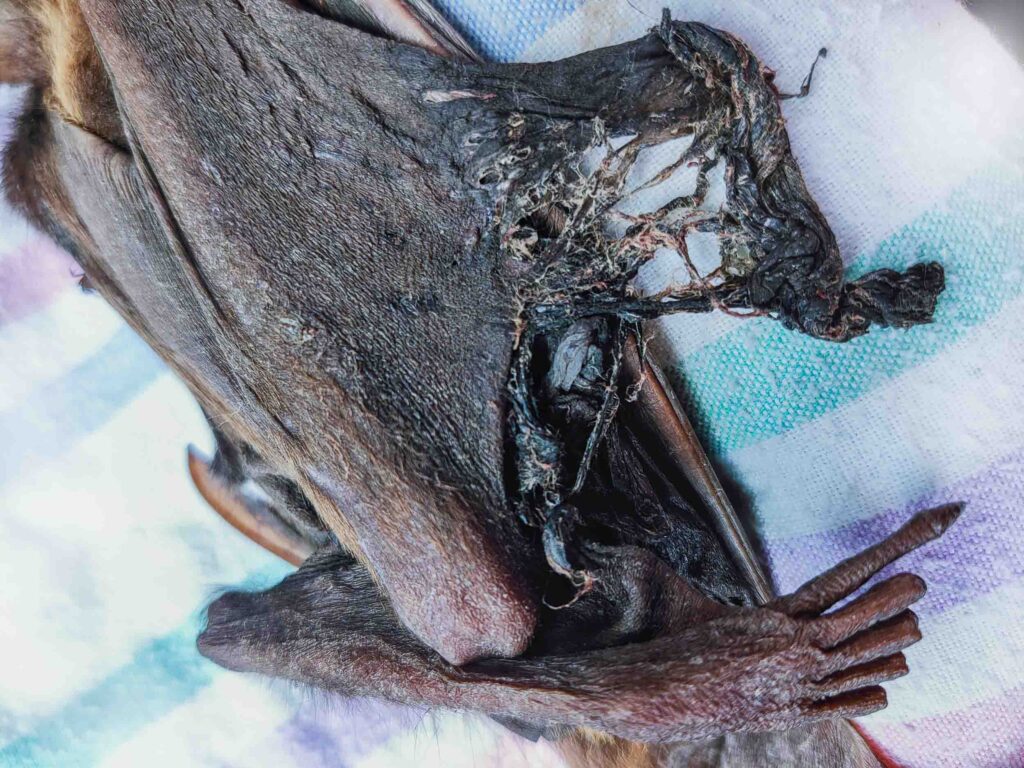
Horrific wing membrane damage
Sometimes the flying-fox is so entangled around the barbs that the offending section of wire needs to be cut to assist the rescue. Only with the property owner’s permission can this be performed. That section is then replaced with a length of non-barbed wire to maintain its integrity.
Barbed wire rescues require our most experienced rescuers. It can often take more than one person if a bat has become particularly entangled. And as you can imagine, they are one of the most distressing types of rescues…
Our rescuers often take the opportunity to raise wildlife friendly fencing methods with the property owner. Or with their permission, may adapt the offending stretch of wire to make it more visible by some cheap and easy methods.
For more information, visit our How To Help page: Reduce Barbed Wire Fencing
Electrocutions And Electroshock By Power Lines
Flying foxes come into contact with power lines when fruiting or flowering trees grow amongst or near the wires.
On the occasion below four Flying-foxes were involved! As this stretch of lines had become a common site, Energex has since bundled the cables to prevent more deaths.
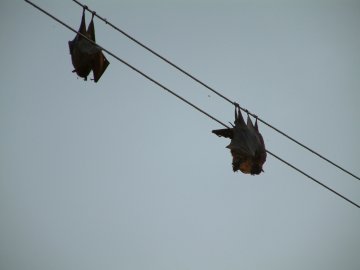
Four bats simultaneously electrocuted on power lines
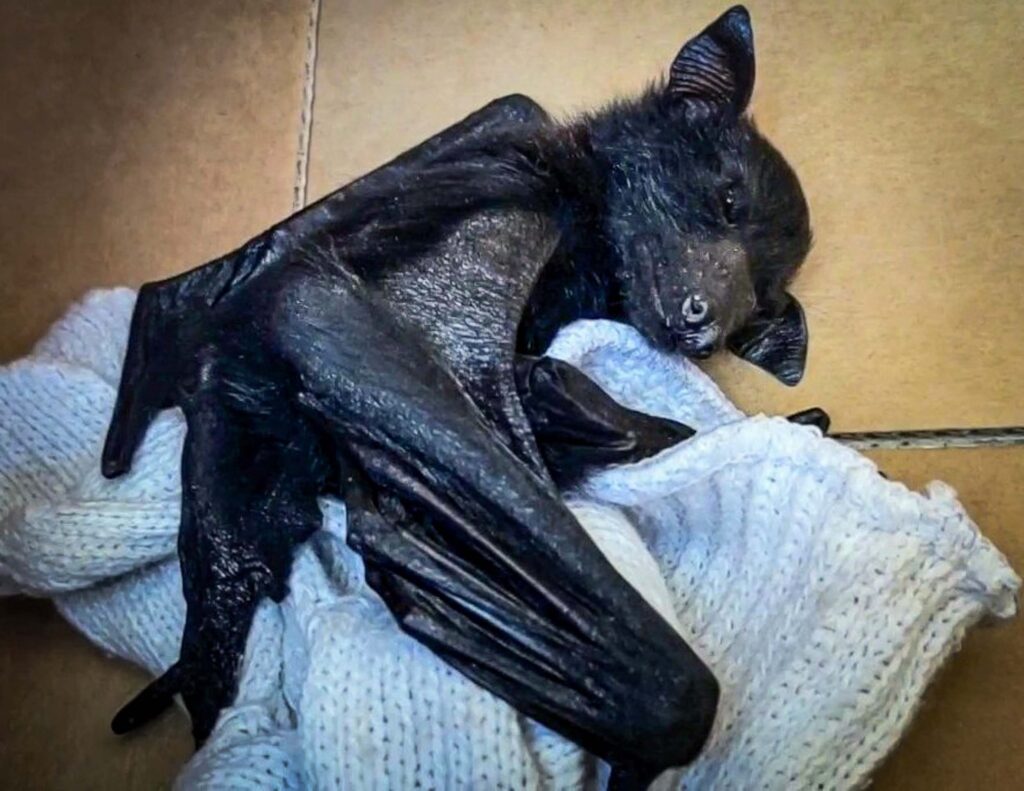
Injuries most often occur when resting on the lines and when two lines are touched simultaneously by their wings. Unfortunately, the outcomes are usually fatal. Those not electrocuted outright receive an electroshock and usually have to be euthanised due to their injuries.
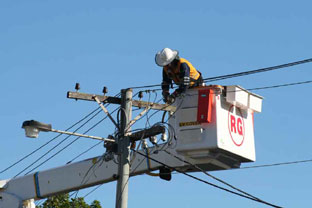
Energex helping to retrieve an electrocuted bat off the power lines
A dependent flying-fox baby carried by its mother (during the months of October-December) often survives. It can remain hidden in the folds of its dead mother’s wings for days. Then it eventually dies of starvation and fly strike unless rescued.
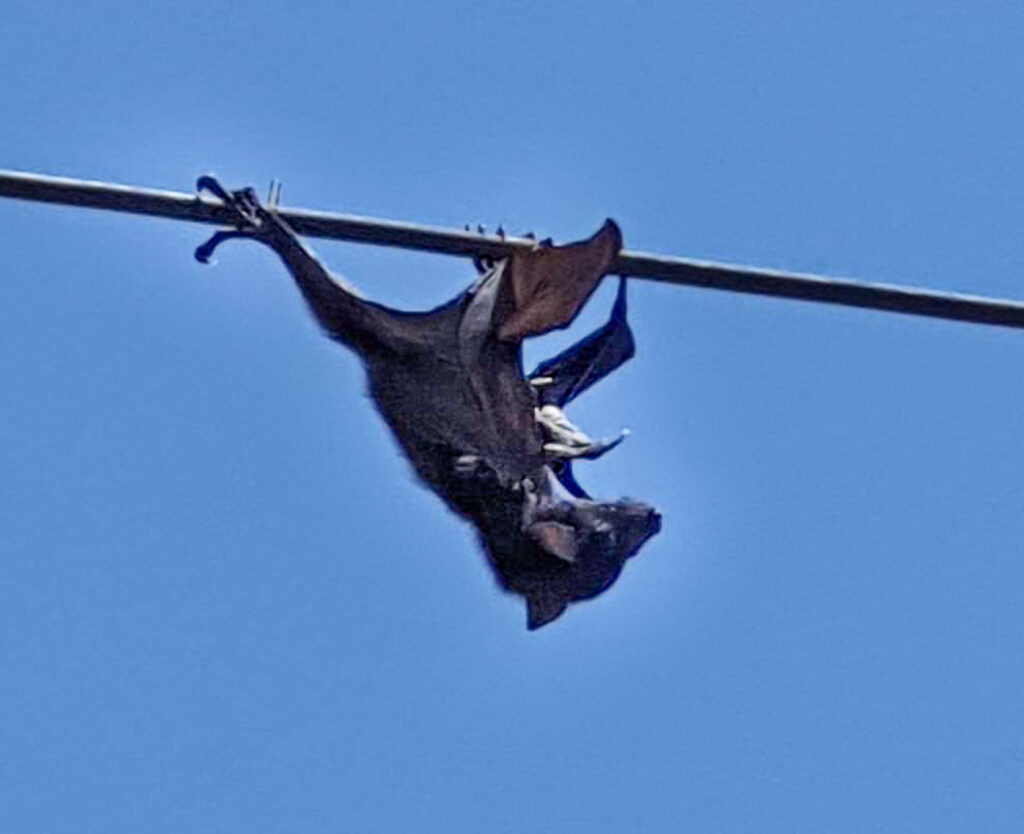
So please report ALL flying-foxes on power lines immediately.
Also make a note of the nearest pole number/s to give to your local wildlife group or electricity company.
Help identify stretches of power lines that are regular death traps to bats. This supports the need for rectification by the local electricity company. And it may simply require pruning of nearby food trees. Thus the inconvenience to the local residents through power disruptions can easily be avoided.
For more information on how to prevent wildlife electrocution, visit our How To Help page: Reduce Electrocution By Power Lines
Entanglement In Fishing Line
Flying foxes like to feed on the flowering mangroves that line our river banks. Unfortunately, careless fishermen often leave tackle behind.
This is a problem in heavily used waterways such as the Noosa River and Moreton Bay. Even the canal estates and waterways of the Sunshine Coast can be frequently affected.
Discarded fishing line, especially with hooks still attached, can be snagged or washed into the trees during high tide.
A Flying-fox can accidentally get entangled on the fishing line. That in itself can cause nasty injuries to a bat – see below:
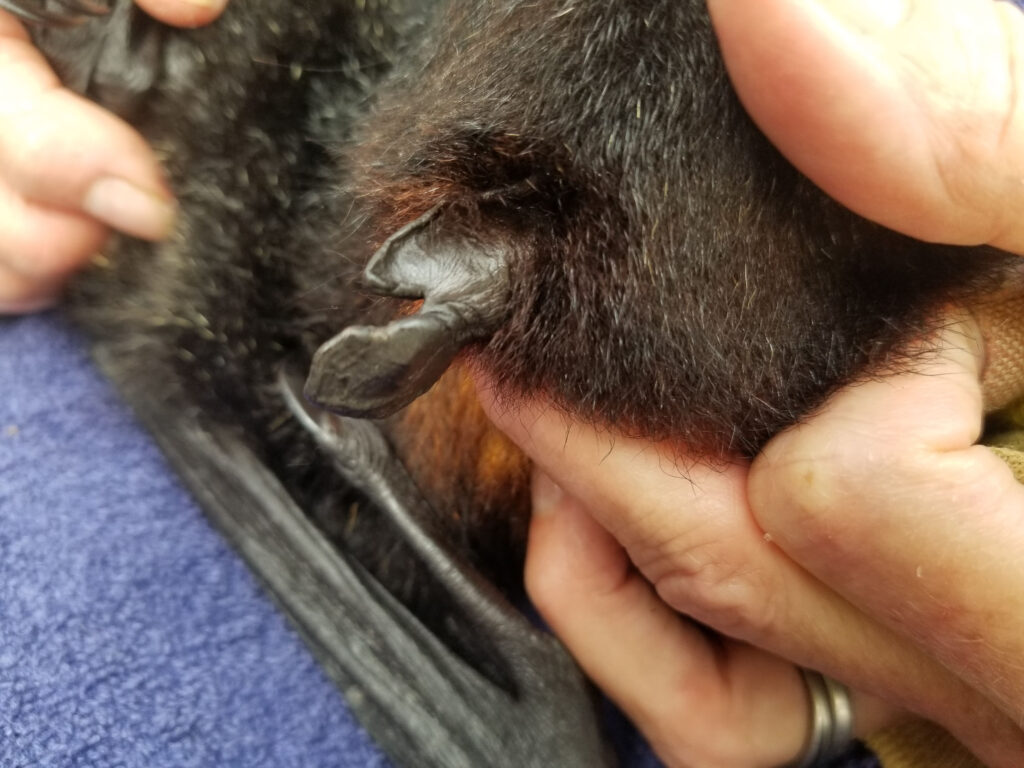
Torn ear on a Flying-fox 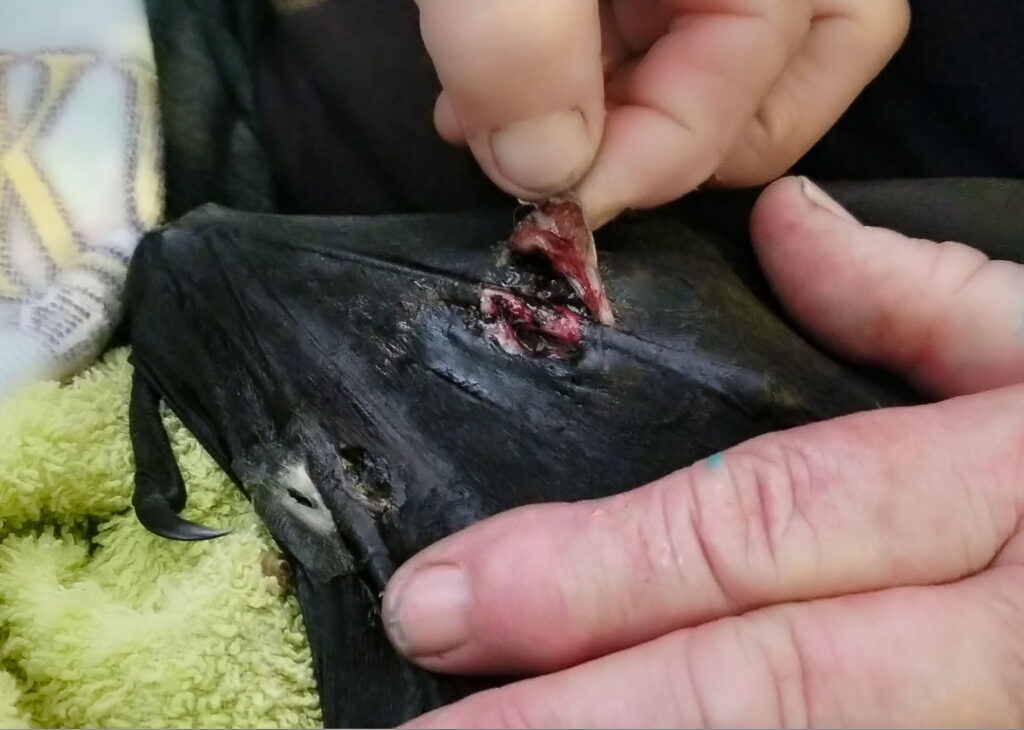
Raw exposed bone and wing membrane tears
But the line itself can then get snagged on other objects too. The daring rescue below resulted because a poor Little red Flying-fox picked up some loose fishing line caught on one of its wings.
After when flying across the river, the fishing line tagged on to a Telstra line, which lay just beneath Energex power lines.
The complex but eventually successful rescue required an experienced boat crew and Bat Rescue volunteer, along with a long handled net and tree pruning saw.
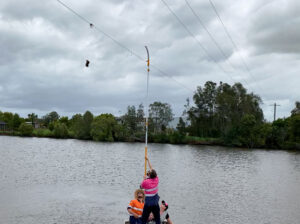
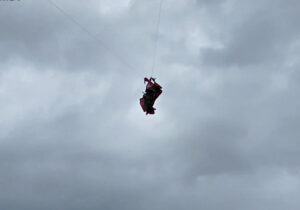
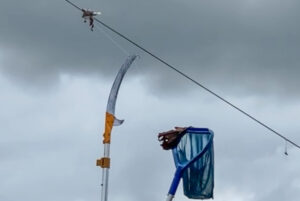
Unfortunately for the Flying-fox however, it was later euthanised due to its injuries. All due to thoughtless disregard and careless disposal of a piece of fishing line…
Road Traffic Accidents
Bats are moving more and more into our suburban areas where traffic is increasing too. Even though they fly at night, many Flying-foxes succumb to car accidents.
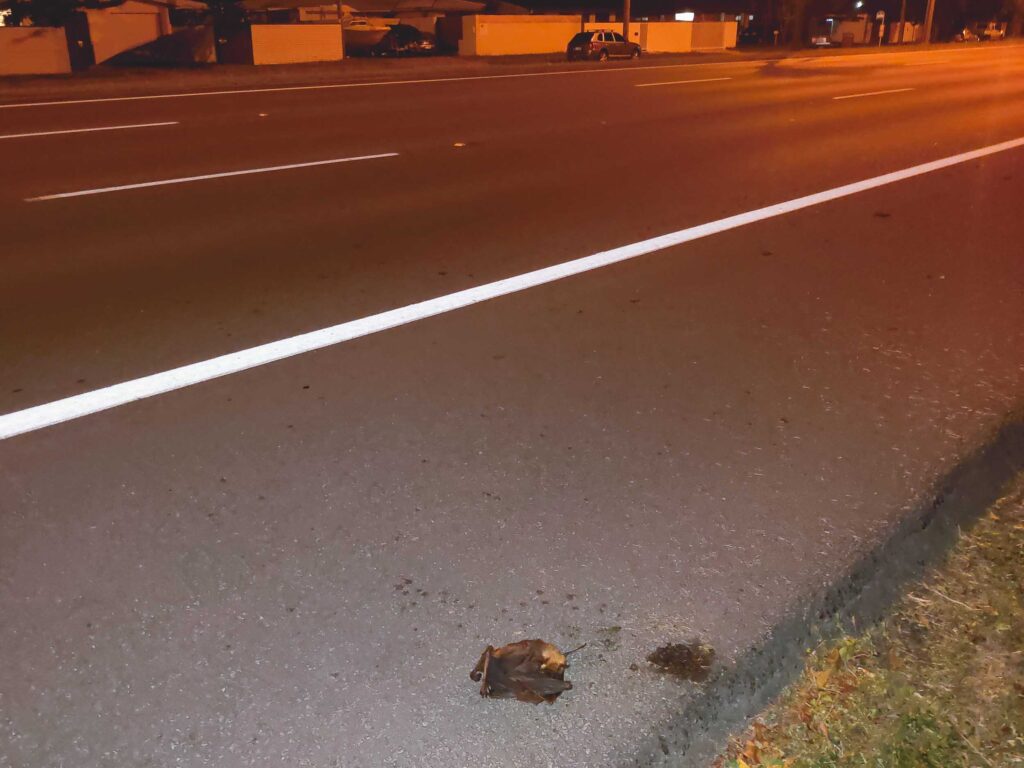
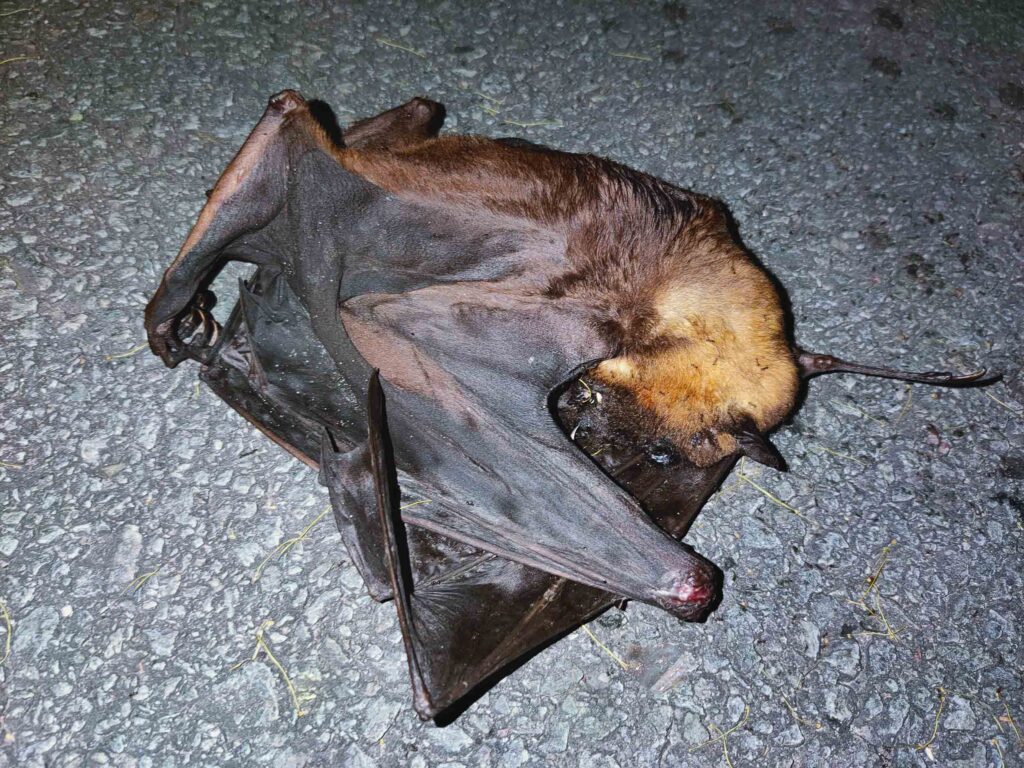
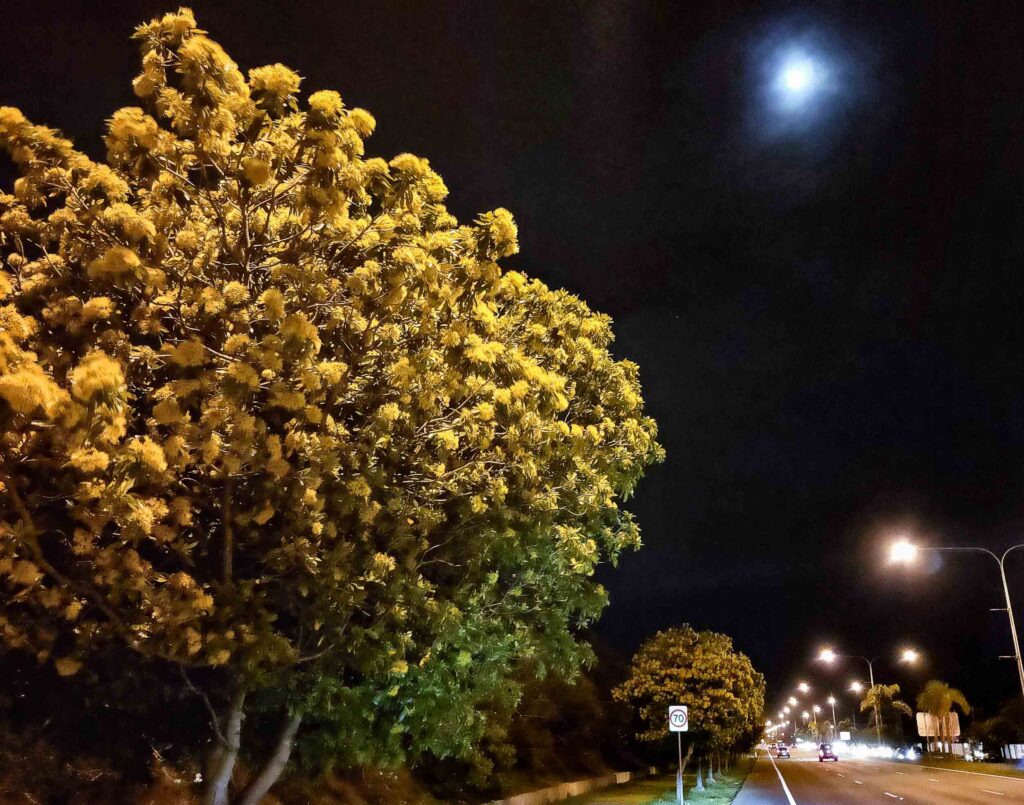
Accidents occur when blossoming Flying-fox friendly trees are grown close to roads. Occasionally a bat may survive. But severe injuries or death are obviously a more common occurrence.
Cat And Dog Injuries
Feral and domestic cats can play a huge part in injuries to flying-foxes and microbats. Eliminating our wild cat population and keeping domestic cats indoors at all times would substantially decrease this type of incident.
Sometimes the puncture wounds made especially by a cat can be particularly difficult to find. All suspected attacks thus require a detailed examination by an experienced vaccinated Vet.
A general anaesthetic and xrays may also be needed to exclude injuries invisible to the naked eye.
Dogs may catch and injure a bat, especially if allowed to wander at night near trees or shrubs. They may even get scratched or bitten themselves.
If this occurs, the wound/s should be thoroughly washed with water and antiseptic and then discussed with your vet. And note that to date, no cat or dog has contracted ABLV or Hendra from a bat.
Cocos Palm Entanglement
This South American palm has long been a popular garden and street tree for its fast growth and tropical look. But it is now regarded as an undesirable and highly invasive non-native plant.
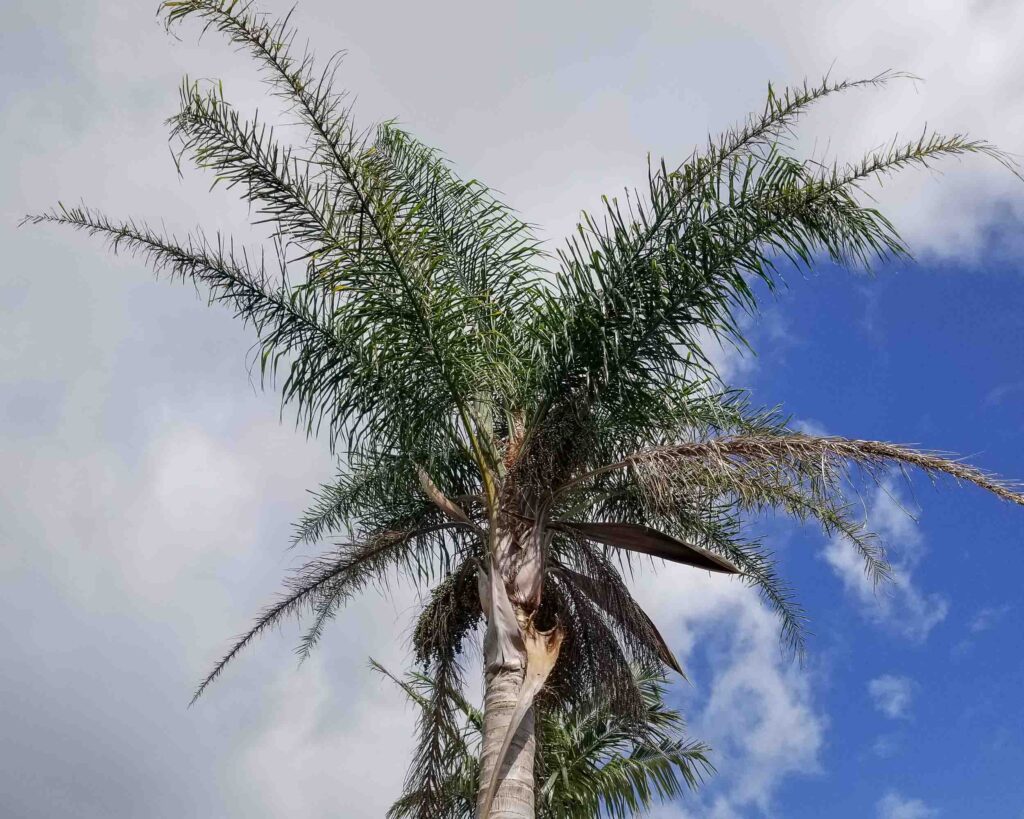
Its rapid spread into our Australian bushland has harmful effect on many species of wildlife and native flora.
Tree lopping companies are kept increasingly busy as cocos palms become more and more unpopular with gardeners and local Councils due to their high maintenance costs.
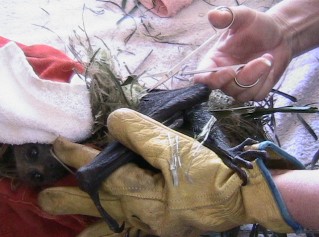
Flying-foxes often get their feet or toes caught in fibrous flower sheath. This results in severe self-mutilation and death.
Or whole body or body parts get caught in leaves and are easily shredded by the animal’s claws. This creates an eventual ‘cocoon’ effect around the entangled animal.
If not physically removed, this causes major stress and finally death to the poor bat.
For more information, visit our How To Help page: Remove Cocos Palms