
Loss of Habitat Means Loss of Food
We urgently need Flying-fox friendly trees and shrubs. Our wonderful and often unique Australian wildlife is increasingly suffering from loss of habitat and thus food supplies. Our constant expanding human population means the destruction of native forests to make way for new suburbs.
Add to this climate change with worsening inclement weather and extensive bush fires. Much of our wildlife is so affected it is now classed as vulnerable, endangered or near extinction.
But Flying-foxes are essential seed and pollen dispersal agents for our native bush and forests.
So we can all help by ridding our suburbs of Flying-fox deadly cocos palms. And instead, plant Flying-fox friendly native trees in our gardens. Or re-vegetate community gardens with more appropriate Flying-fox food plants.
Suggested Flying-Fox Food Plants
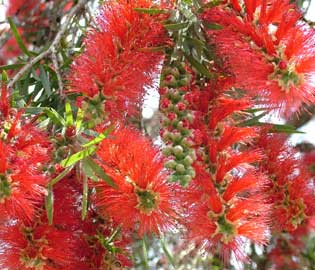
Bottlebrush 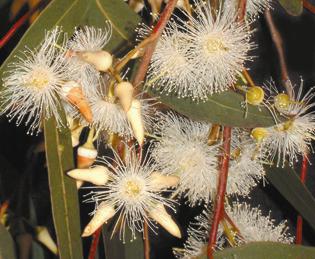
Eucalypt 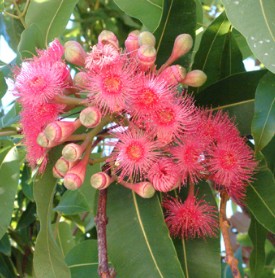
Swamp bloodwood
- EUCALYPTS ALLIES: Lemon Scented Gum (Corymbia citridora), Pink Bloodwood (C. intermedia), Swamp Bloodwood (C. ptychocarpa), Plunket Mallee (E. curtisii), Morton Bay Ash (E. tessellaris), Swamp Box (Lophostemon suaveolans)
- BANKSIA: Old Man Banksia (B. serrata), Coastal banksia (B. integrifolia)
- LILLYPILLY: Pink-fruited Lillypilly (Acmena smithii), Blue Lillypilly (Syzygium oleosum)
- PAPERBARK: Weeping Paperbark (Melaleuca leucodendron), Broad-leaved paperbark (M. quinquenervia), Green-flowering Paperbark (M. viridiflora)
- FIG: Sandpaper Fig (Ficus coronata), Small-leaved Fig (F. obliqua)
- BOTTLEBRUSH: White Bottlebrush (Callistemon salignus), Red Northern Bottlebrush (C. viminalis)
- GREVILLEA: Orange Greville (G. pteridifolia), Silky Oak (G. robusta)
- WHITE CEDAR: (Melia azenderach)
- BEACH ALMOND: (Terminalia arenicola)
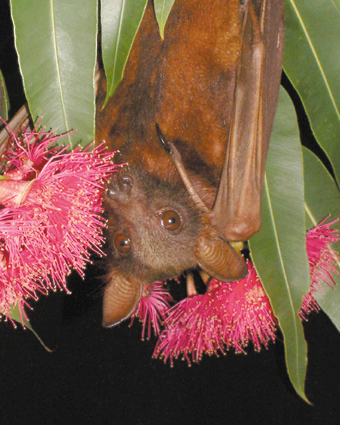
Want More Information?
For more detailed information of Flying Fox friendly food plants, refer to this extensive list of what to plant. Created by esteemed Australian (and now Queensland) horticultural extraordinaire Jerry Coleby-Williams, it is a valuable resource for all gardeners.
Or there is also a good section in “Flying Foxes, Fruit and Blossom Bats of Australia” written by wildlife scientists Dr. Leslie Hall and Dr. Greg Richards. Both studied bats for over 40 years and together compiled information Australia-wide and overseas.
[Flora photographs by © Halley]