
COCOS PALMS – THE PROBLEM
Cocos Palms Kill Bats
Unfortunately, flying-foxes love the fruit of the non-native cocos palm. But what many of us don’t know is that cocos palms injure or kill hundreds of Flying foxes each year.
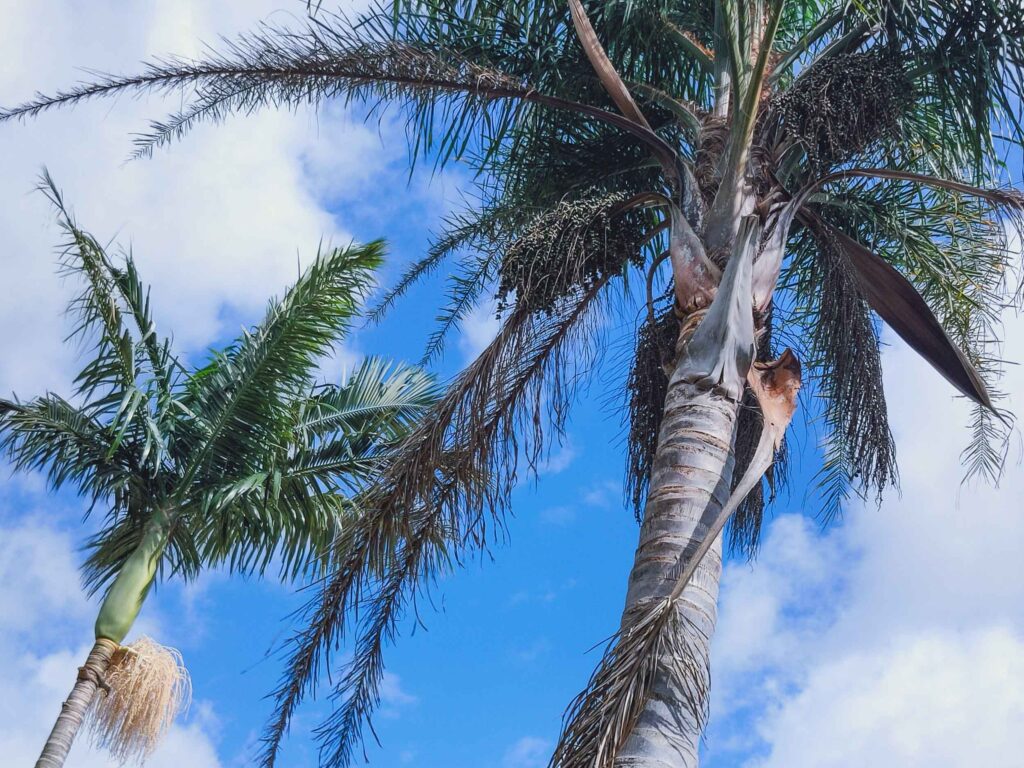
This is because:
- Sticky fruits can cause severe constipation resulting in dehydration and death in young animals.
- Immature seeds are poisonous to bats and can kill them. But Flying-foxes often eat them whilst green in times of hunger (September to January).
- The hard cocos palm seeds prematurely wear down their teeth. This affects their ability to eat.
- Even worse, wild young animals are now frequently presenting with worn, missing or even no teeth. If they have other injuries as well, they are often mis-diagnosed as an old bat. This has resulted in un-necessary euthanasia by Vets.
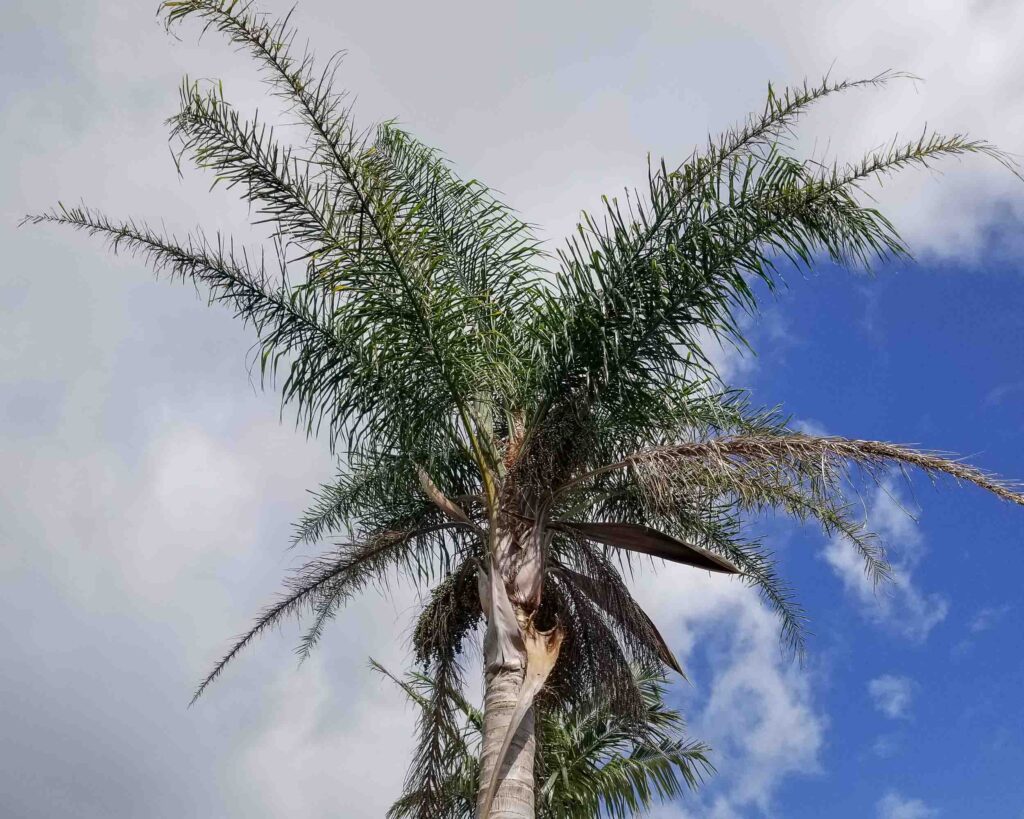
Cocos palm have hard and toxic green seeds – but bats love them (unfortunately!) 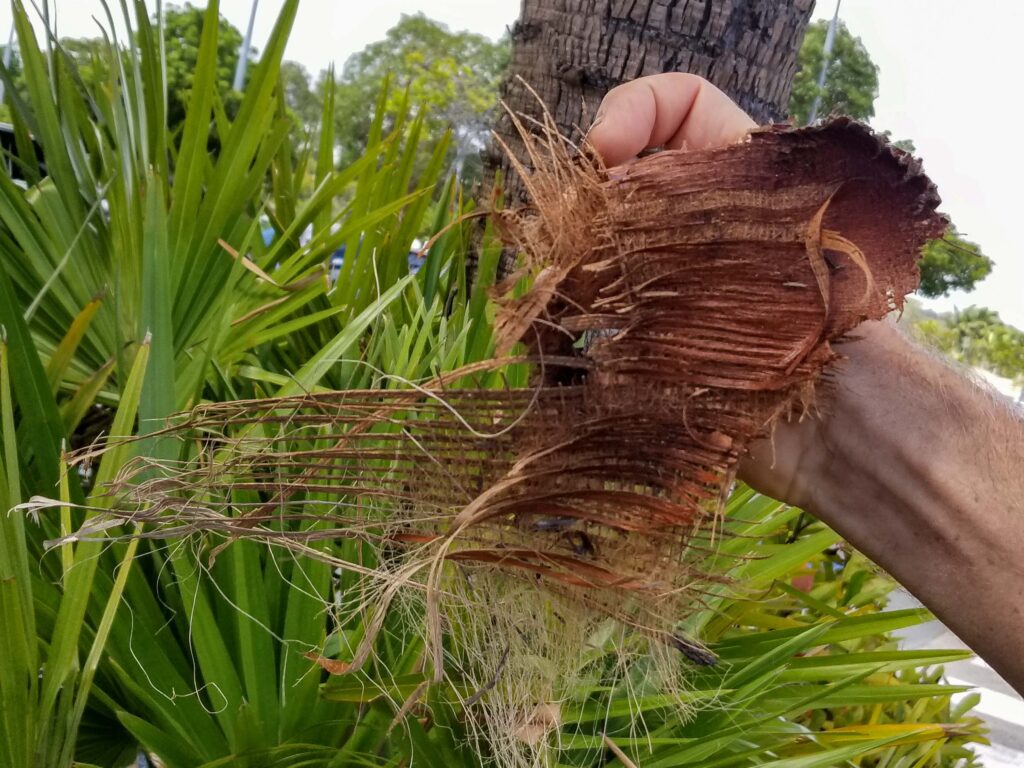
Fibrous palm sheath can be deadly to a Flying Fox
- Hard seeds get stuck behind especially juvenile Flying-fox ‘dog-like’ incisor teeth. This prevents them from being able to close their mouth or swallow. Death by slow starvation is the horrific outcome.
- Flying foxes go to the ground to eat fallen seeds. There they are preyed upon by domestic dogs and cats. In the breeding season many adults are attacked and killed. Whilst carrying baby bats, the babies can also die during an attack. Or they die from starvation if of an age were it was left back in the colony whilst mum flew out to forage.
- Bats particularly their toes get caught up on the flower sheath parts. Seriously entanglement often causes severe self-mutilation. And results in a horrible cruel death from injury, dehydration and starvation if not rescued.
- Whole body or body parts are caught in the palm leaves which are easily shredded by the bat’s claws. This often creates a trapping ‘cocoon’ effect around the animal. Severe stress and death follow if not physically removed.
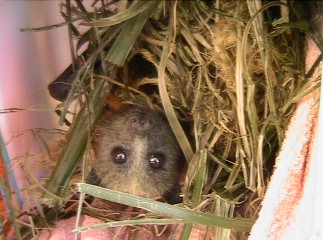
A Flying-fox caught up in cocos palm sheath 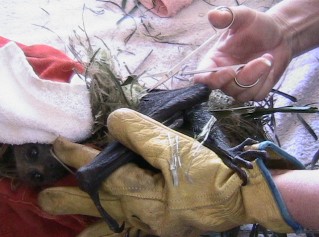
Entangling an injured Flying-fox from a cocoon of cocos palm sheath
For more interesting information, read Cocos Palms Kill Flying Foxes.
Cocos Palms Are Non-Native To Australia
Worse still, the cocos palm is still a very popular palm with gardners, landscapers and even some local Councils. But it is a non-native palm to Australia.
And bats unfortunately help disperse the palm seed when foraging upon it. This can spread the seed up to 100km from its source during their wide ranging flights.
THE SOLUTION FOR COCOS PALMS
Remove The Fruit
If you have these palms in your garden, then removing the fruit will often decrease a bat problem you may have in your backyard. But the fruit can get up to 70kg and may not be too easy to cut down.
Plus just removing the seed is then an annual job. And with mature tall trees may well require an arborist to help you do it. So is not a cheap or long term option.
Remove The Tree
Cocos palms not only attract bats, but also rats and snakes often take up residence in them.
If planted near barbed wire or fruit netting, they also enhance the chance of barbed wire entanglement, injury and death.
The cocos palm is now deemed an invasive species in most states in Australia. Thankfully Conservationists and local Councils alike are now removing them altogether.
So, if you have any cocos palms on your property or locally in your community, then please support efforts to remove them completely.
Remember: NO PALM – NO HARM